How Long Does It Take to Build an ADU in Whitney, NV?
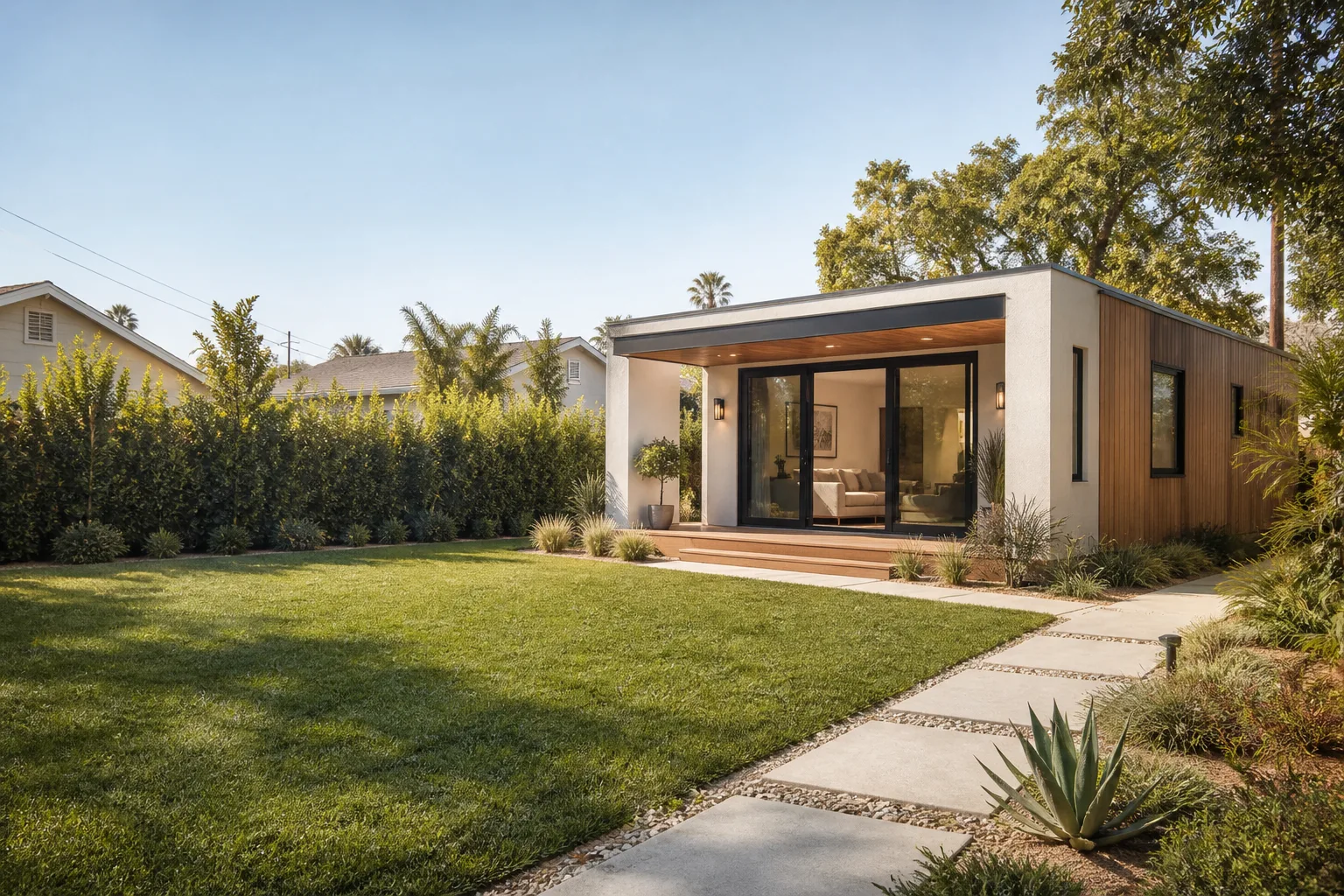
Most ADU timeline guides say 3-6 months. For a Whitney detached casita, that’s the construction phase only. Add 4-6 months of Clark County plan review (longer if septic review is required), and you’re looking at 10-14 months from signed contract to move-in day - a number that changes every financial assumption in the project. If you’re planning financing, a tenant move-in date, or a multigenerational household shift, build your schedule around the permit queue, not the hammer. Call (844) 797-4814 and we’ll walk you through a realistic timeline for your lot.
Key Takeaways
- Construction is rarely the bottleneck in Whitney. Clark County plan check and Environmental Health septic review are.
- Total timeline from contract to keys: typically 10-14 months for a detached ADU.
- Submitting septic paperwork in parallel with building plan check can shave 6-8 weeks.
- Prefab units (Abodu, Cover, Mighty Buildings) shorten construction to 6-10 weeks but do not shorten permit review.
- Missing your HOA’s monthly design review deadline adds 4-6 weeks on its own.
Why the Permit Queue - Not the Build - Defines Your Whitney Timeline
Whitney is an unincorporated Clark County community, which means ADU approvals run through the county’s rules rather than a city permitting desk. That distinction matters for schedule. County plan review for an ADU submittal typically takes 8-14 weeks on a clean first pass, and longer if the reviewer comes back with corrections. A revision cycle adds 3-5 weeks each time. Most of the timeline risk on a Whitney project lives in that review window, not on your lot.
The other factor specific to this area: many Whitney lots sit on septic systems rather than full sewer. Clark County scrutinizes added bedrooms and kitchens for septic capacity, so a casita can be blocked by septic sizing before zoning is even the question. If your property has a septic system, Environmental Health review is a separate track that can run 4-10 weeks. We’ve seen projects stall for two months waiting on a septic evaluation that should have been started in week one.
The Honest Whitney ADU Timeline, Phase by Phase
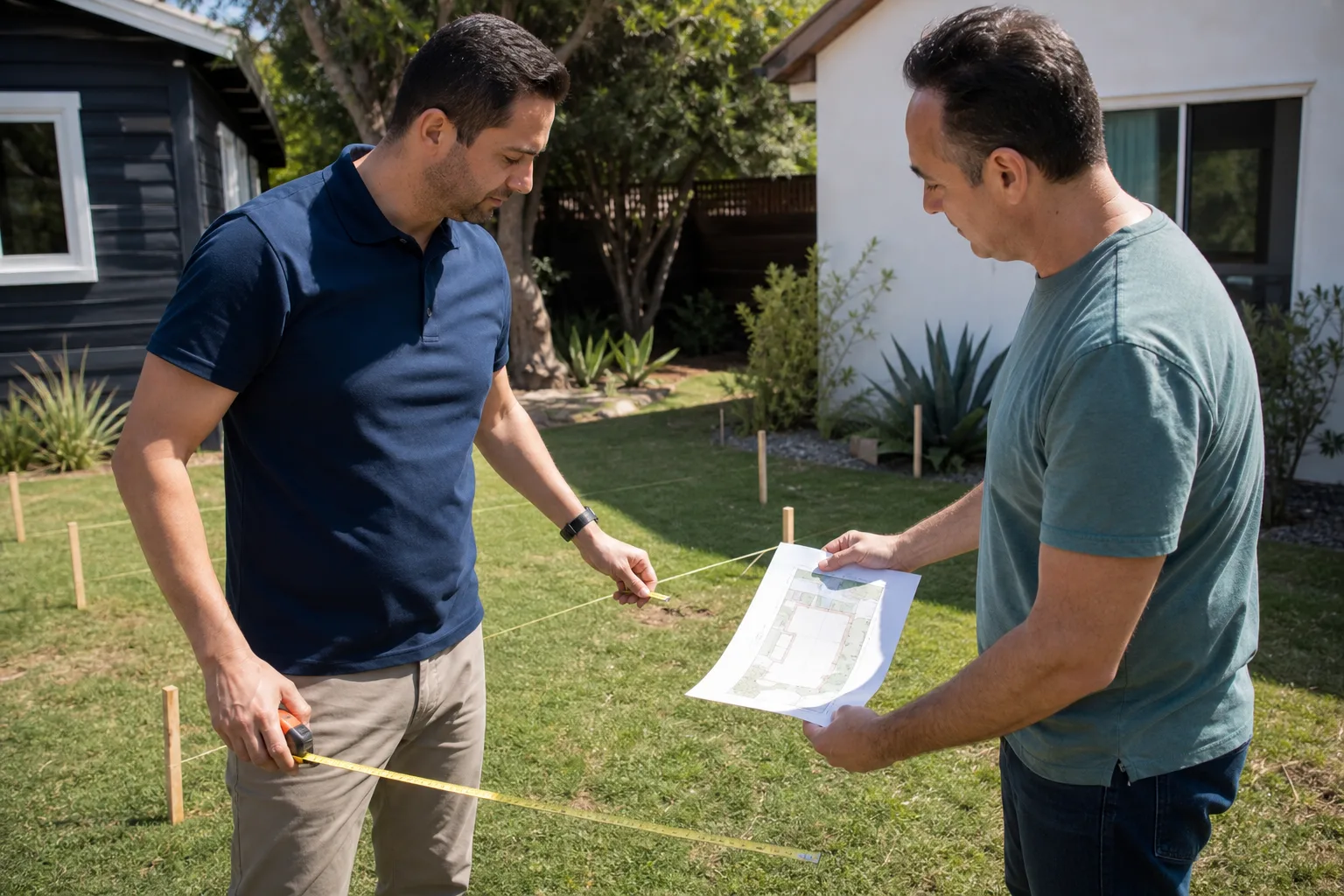
Here’s how the schedule actually breaks down for a detached ADU on a typical Whitney lot, based on how these projects run through Clark County:
| Phase | Realistic Duration | What Drives It |
|---|---|---|
| Design and engineering | 4-8 weeks | Site survey, structural calcs, septic evaluation if needed |
| Clark County plan check | 8-14 weeks | Reviewer queue; each revision adds 3-5 weeks |
| Environmental Health septic review | 4-10 weeks | Can run parallel to plan check if submittal is complete |
| HOA design review | 4-6 weeks | Monthly meeting cycle; missed deadline costs a full month |
| Construction | 10-20 weeks | ADU type: garage conversion fastest, detached ground-up slowest |
| Final inspection and CO | 1-3 weeks | Inspection scheduling and any punch-list corrections |
The parallel-path move most homeowners don’t know about: an experienced contractor submits the Environmental Health septic paperwork at the same time as the building plan check, not after. Done right, that shaves 6-8 weeks off the total. Done wrong - an incomplete septic submittal without a licensed engineer’s evaluation upfront - it bounces back and costs you time instead of saving it. The septic evaluation has to be accurate and complete on day one.
HOA design review is the other quiet schedule-killer. Whitney HOAs typically meet monthly to review submittals, so if you miss the submission deadline by a day, that’s another 4-6 weeks before the next meeting. The schedule-protection move is submitting to the HOA the same week as the county - not after county approval comes through. Most homeowners assume HOA review waits until county sign-off. It doesn’t have to, and it shouldn’t.
Does Prefab Actually Speed Up a Whitney ADU?
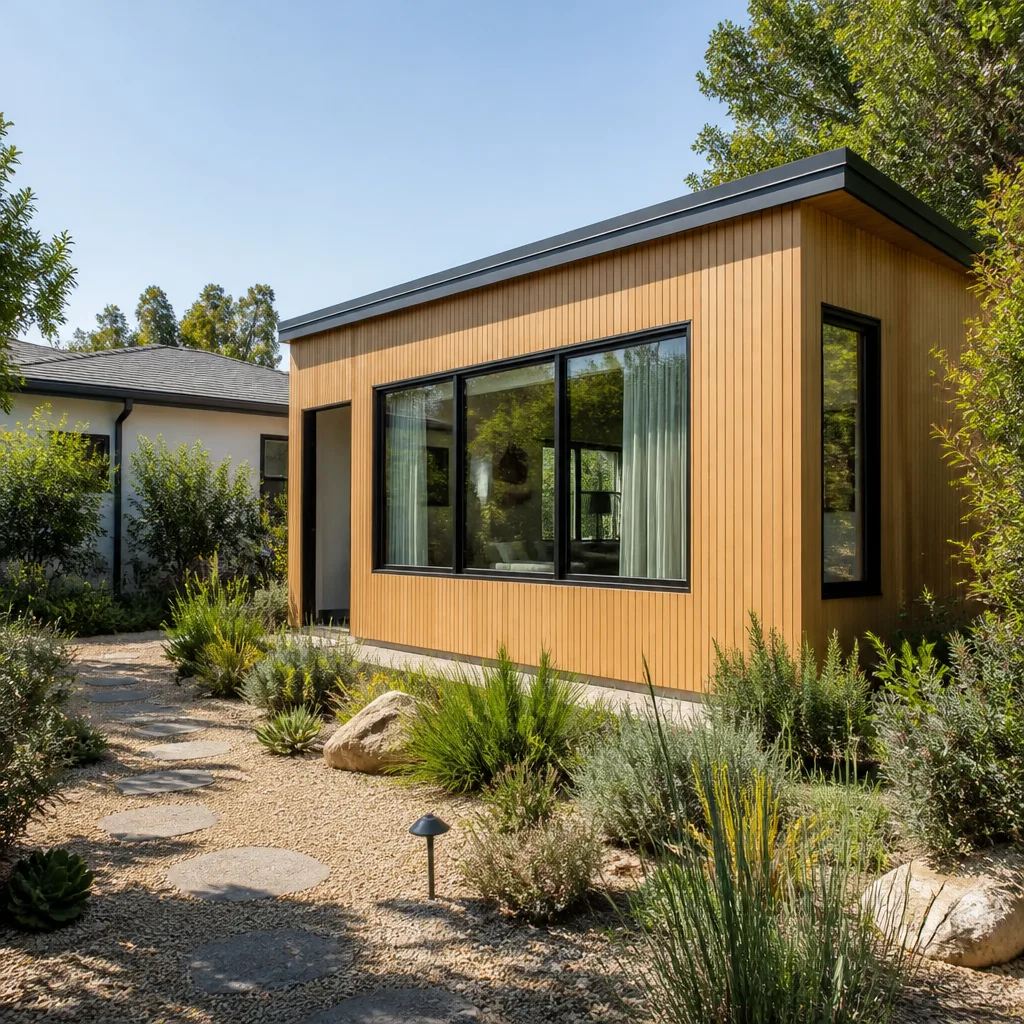
Partially. A factory-built unit from Abodu, Cover, or Mighty Buildings shortens the construction phase to 6-10 weeks instead of 10-20 for stick-built. What it does not shorten is permit review, site prep, or utility connection. Those timelines are identical to a site-built ADU. Prefab saves construction weeks, not permit weeks - and if your project is stuck in the permit queue, the prefab advantage won’t show up until after you’ve cleared it.
Where prefab earns its keep on a Whitney lot is the short rear-yard space common in the post-1980s and 1990s subdivision stock off Boulder Highway and Sunset Road. A factory unit with a tighter footprint can fit where a stick-built structure with full site framing wouldn’t. The trade-off is that site prep - pad, utilities, connection - still has to happen on your lot and still runs on a normal construction schedule.
What the Desert Does to Your Build Schedule
Whitney summers at 110°F+ change how construction is sequenced. Concrete pours, roof work, and exterior finishing get shifted to early morning, which can stretch a phase by a few days. Roof and slab detailing have to account for the harsh Mojave sun, the monsoon flash-flood cycle, and the heat-driven cracking on driveways and pads. None of this changes the month count dramatically, but it’s the kind of local condition that shows up in the schedule and in the quote. A contractor who plans around it builds in fewer surprises than one who doesn’t.
The cooling load on a Whitney casita is also higher than a generic ADU plan assumes. Orientation, shade, and HVAC sizing get decided at design, and if they’re wrong, you find out in August. That’s the reason to settle design details before the plan check submittal rather than during construction.
Common Local Scenarios (and How They Change the Clock)
Multigenerational casita for aging parents
You need the unit by a specific date because a parent is moving in. The schedule risk is entirely in review. We start the septic evaluation and the HOA submittal in the same week as the county package, because any sequencing delay on a fixed move-in date is a problem you can’t solve later. This is where the parallel-path approach matters most.
Garage conversion for rental income
Fastest path on the timeline. A garage conversion skips the detached foundation and most site work, and construction runs closer to the 10-week end. Your income projection should still build in the permit window. If you’re counting on rent in month six, that projection is early by at least two quarters on a Whitney project.
Detached ADU on a septic lot near Boulder Highway
The septic capacity question governs the whole project. If your lot can’t support an added bedroom and kitchen on the existing system, the project stops before zoning. We get a licensed engineer’s evaluation in week one, before design, because that answer determines whether the project is viable at all. It’s the single most important early step on a septic lot.
How Sutton ADU Builders Whitney Protects Your Schedule
The single biggest cause of timeline slippage on longer ADU projects is a response that waits for the next weekly check-in call. County inspection scheduling, permit status questions, and reviewer delays get handled the same day they surface when someone picks up. A live person answers our line 24 hours a day, seven days a week - no voicemail tree, no callback queue. That’s not a feature we’re proud of for its own sake; it’s a schedule control.
Every Whitney project runs on The Threshold Standard. You get a written price before a single tool is lifted - no surprise invoices, no scope creep passed silently to the bill. The 365-Day Done Right Promise covers defects in workmanship for one full calendar year from project completion; if it isn’t right, we make it right, and there’s a free second visit if any element of the build fails. Every technician is background-checked, identity-verified, uniformed, and photo-badged, with their name and photo sent to you before they arrive. Our technicians have up to 20 years of experience, and we work fluently with Abodu, Cover, Mighty Buildings, Tuff Shed conversions, and James Hardie exterior systems.
If you’d rather start with the whole picture - site, septic status, HOA, timeline - the New Detached ADU in Whitney page breaks down the build itself, and you can read more about how we approach ADU projects.
FAQs
Plan on 10-14 months from signed contract to move-in for a detached ADU in Whitney. Construction itself runs 10-20 weeks depending on ADU type; the rest of the timeline is design, Clark County plan check (8-14 weeks), Environmental Health septic review if your lot requires it (4-10 weeks), HOA review, and final inspection. Call (844) 797-4814 for a timeline matched to your specific lot.
You can’t shorten the county’s queue, but you can avoid adding to it. Submitting a complete package on the first pass avoids revision cycles that each add 3-5 weeks. Running the septic submittal in parallel with building plan check shaves 6-8 weeks, and submitting to the HOA the same week as the county - rather than after approval - prevents a missed monthly meeting from adding 4-6 weeks. Call (844) 797-4814 and we’ll help you plan the submittal sequence.
Prefab shortens construction to 6-10 weeks, but it does not shorten permit review, site prep, or utility connection. Those phases run on the same clock as stick-built. So a prefab unit from Abodu, Cover, or Mighty Buildings can save construction weeks, but your total timeline is still governed by the Clark County review window. Call (844) 797-4814 to compare prefab and site-built timelines for your lot.
Septic capacity gets reviewed by Clark County Environmental Health before your ADU is approved, and it can block the project before zoning is even the question. That review takes 4-10 weeks, but starting it in week one with a licensed engineer’s evaluation can run it parallel to plan check. If your system can’t support the added bedroom and kitchen, we tell you before you spend on design. Call (844) 797-4814 for an honest assessment of your septic situation.
If you’d rather have it looked at, Sutton ADU Builders Whitney offers a no-pressure assessment in Whitney - call (844) 797-4814.
Written by the team at Sutton ADU Builders Whitney, serving Whitney, NV.