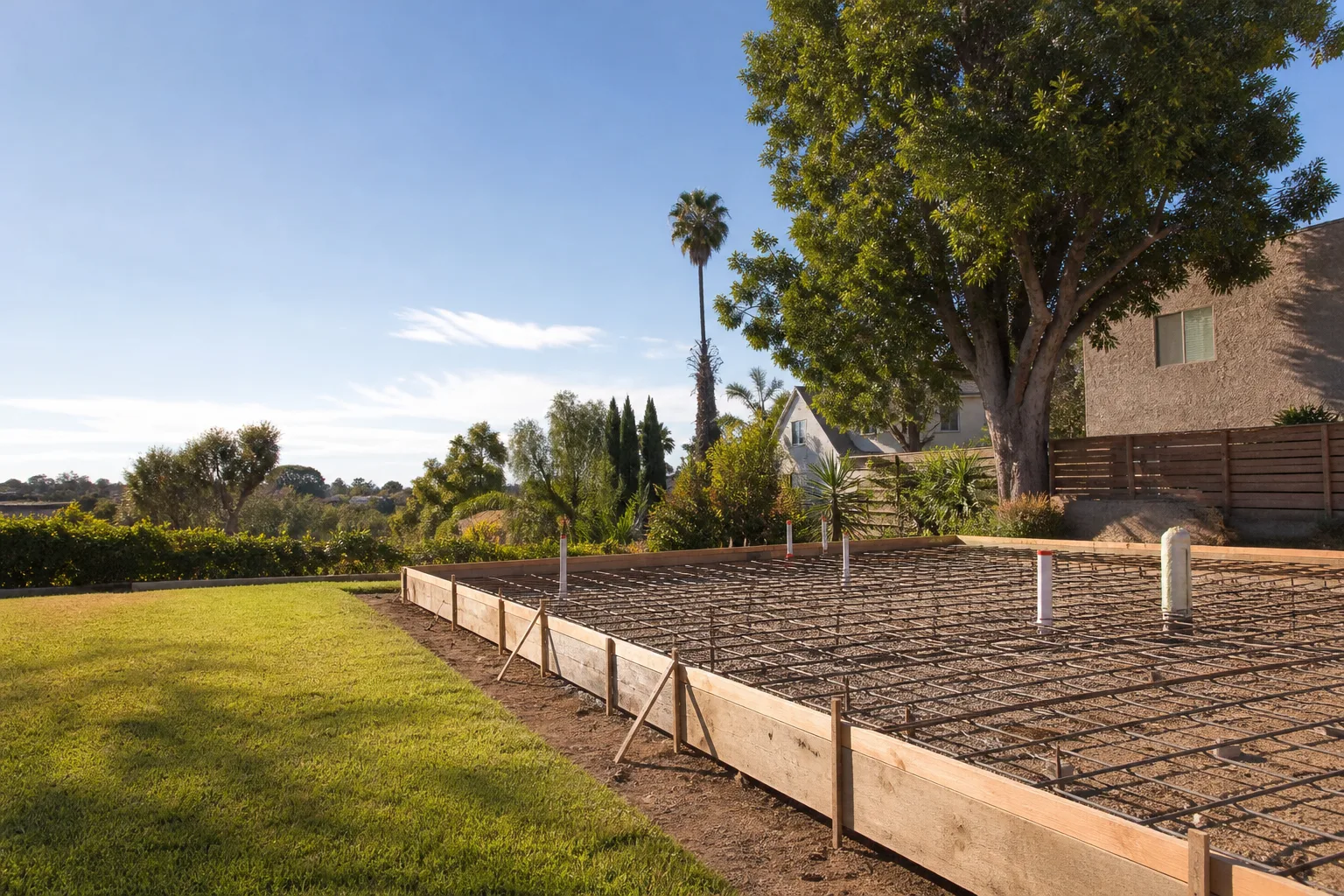
Tuff Shed Site Prep & Utilities: The Whitney Owner’s Guide
We prepare pads, run utilities, and handle the concrete and electrical work a Tuff Shed needs before it can sit level and dry in Whitney. Most site prep and utility packages for a standard Tuff Shed run $3,200 – $9,800 installed depending on slope, distance to power, and whether you need a concrete slab or a gravel-and-timber pad. We’re an independent provider working with Tuff Shed owners, not affiliated with Tuff Shed itself.
Owners usually discover the problem the same way. The floor feels springy underfoot. A door drags on the frame. Water pools at one corner after a monsoon, or an extension cord runs across the yard because there’s no outlet inside. In Whitney, the giveaway we see most often is a shed pad poured flat before the grading settled – then a year of desert swing temperatures heaves one edge and the whole structure racks out of square.
Key Takeaways
- Most Tuff Shed site prep and utility packages in Whitney run $3,200 – $9,800 installed.
- A proper pad is compacted, level to within ¼ inch across the footprint, and graded for drainage.
- Electric service to a shed needs a permit; we pull it and pass inspection.
- We give you a written price before any work begins, backed by the 365-Day Done Right Promise.
Which Tuff Shed Models This Applies To
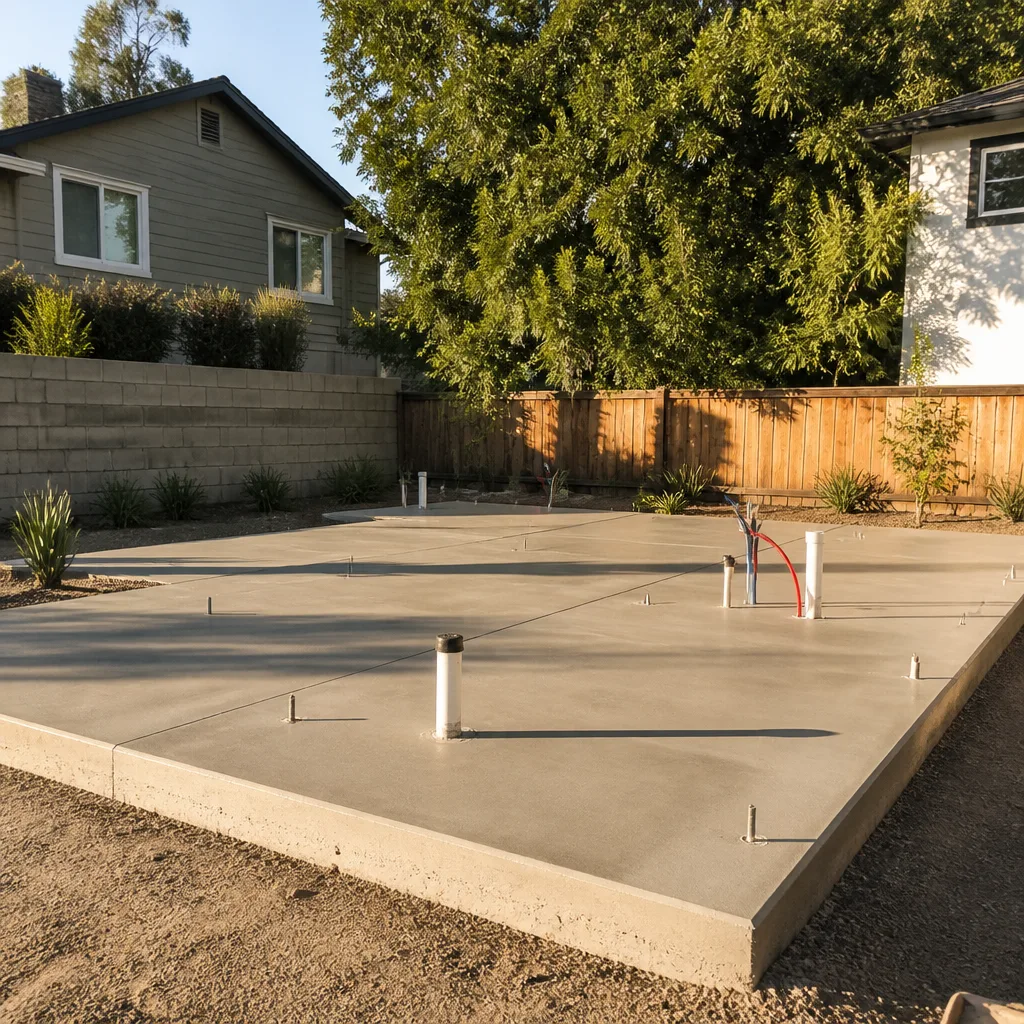
Site prep and utilities are universal – every Tuff Shed from the smallest 8×8 Garden Shed to a two-story Premier Tall Barn sits on a foundation and, if you want power, a service run. What changes by model is the footprint, the anchoring method, and how much electrical load the structure will realistically carry.
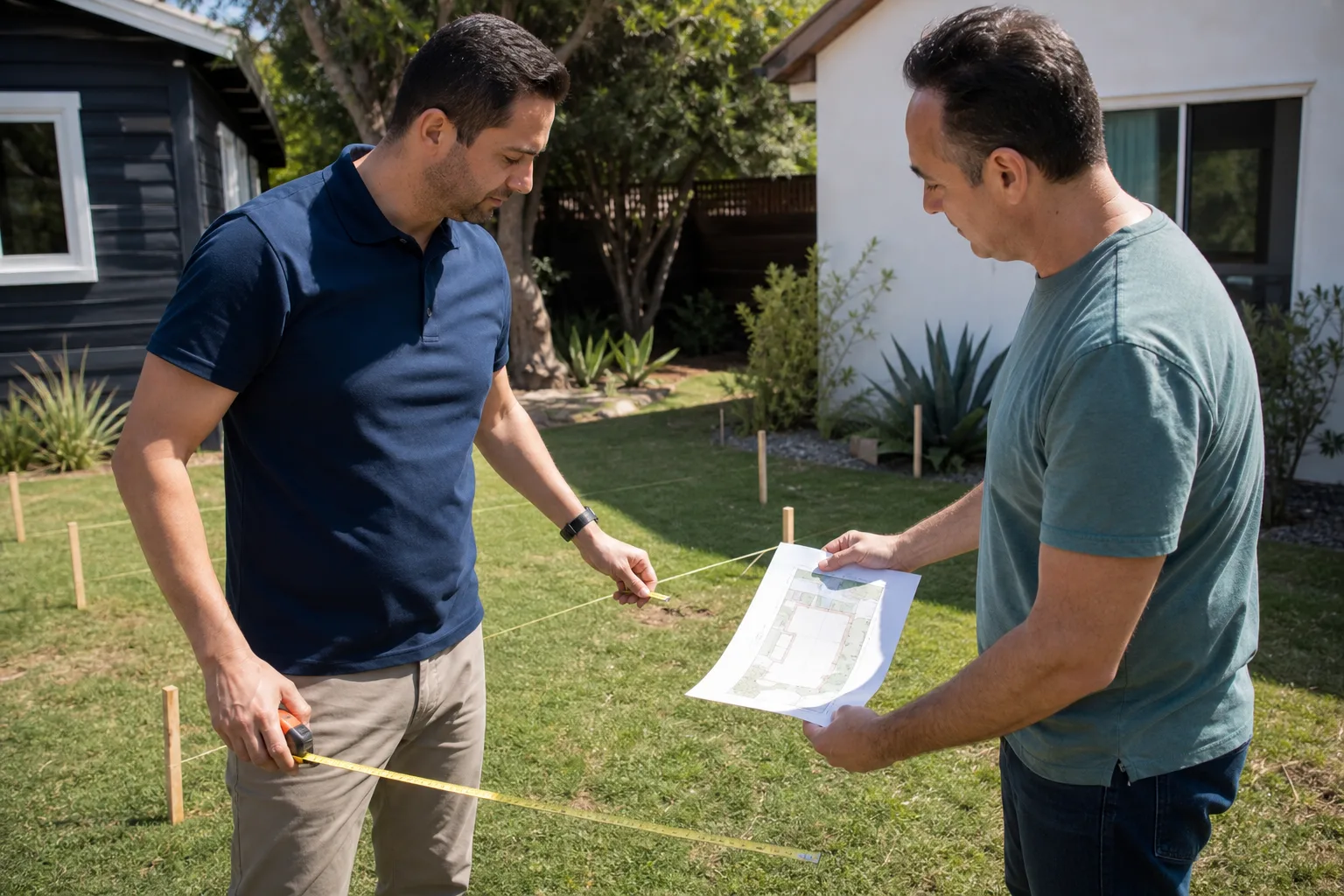
Here’s how to identify what you’re working with. Measure the actual outside footprint at the base, corner to corner, and check those diagonals against each other. If they differ by more than an inch, the pad underneath has moved and the shed has followed it. Look for the model plate – Tuff Shed stamps it inside the door frame or on the header. That tells you the series, and the series tells us the anchor pattern and roof dead load we’re designing the pad and service for.
On the OEM-versus-aftermarket question: for the structural shell, Tuff Shed’s own parts are the safest fit because the panels are cut to their spec. For the parts we touch – concrete, framing lumber, conduit, breakers, outlets, anchor bolts – there is no “Tuff Shed brand” to match. We use materials that meet the same code and often exceed the original. A treated 4×4 skid is a treated 4×4 skid; what matters is the grade, the compaction under it, and the drainage around it. When we quote, we list exactly what goes in, so you can compare like for like.
Signs Your Tuff Shed Site Prep & Utilities Is Failing
Most failures here show up as a structure problem when the real cause is underneath. Here’s what to watch for in Whitney.
- Floor feels spongy or out of level. The pad has settled unevenly or the soil under it wasn’t compacted. Springy floors in a shed almost always trace back to a skid or slab that lost bearing, not the floor panels themselves.
- Doors and windows stick or won’t latch. When one corner drops, the frame racks and the openings twist. It’s the single clearest sign the foundation has moved – fix the pad, and the doors line up again.
- Water pooling at one side or seeping under the base. The pad isn’t graded away from the structure, or the surrounding soil has eroded. In Whitney, where summer storm runoff comes fast and hard, a flat pad turns into a small lake in minutes.
- Extension cords running out to the shed. No permanent electrical service. It’s workable for a while and a nuisance forever – and thin extension cords running lighting or tools are a genuine fire risk.
- Corrosion or rust on the anchor hardware. Moisture sitting against untreated fasteners. Once the anchors rust through, the shed is no longer tied down, and that matters when the spring wind season arrives.
Replacement Cost & What’s Included
| Item | Installed range in Whitney |
|---|---|
| Gravel-and-timber pad (standard footprint) | $1,400 – $2,600 |
| Concrete slab, reinforced, graded | $2,800 – $5,400 |
| Electrical service run (trench, conduit, panel) | $1,200 – $3,200 |
| Interior outlets and lighting circuit | $450 – $1,100 |
| Full package (pad + power) | $3,200 – $9,800 |
The range is driven by three things: slope of the lot, distance from your main panel, and whether we’re pouring concrete or building a gravel pad. Trenching across a finished yard or around hardscape costs more. You get a written, line-item price before a single tool comes out – parts and labor broken out, no change orders slipped in later. The work is covered by the 365-Day Done Right Promise, and if a repair or element fails within that year, the return visit is free.
DIY or Call Us?
Some things you can check yourself. Measure the footprint and diagonals. Look for ponding after a storm. Note whether doors drag. That tells you whether the pad has moved – useful before you call anyone.
Where it goes wrong is the work itself. Electrical service to a shed needs a permit and an inspection; running it without one creates a real hazard and a problem at resale. Setting a slab right requires compaction and grading judgment that’s hard to get right without experience, and getting it wrong is expensive to undo. And anchoring properly matters more than it looks in wind country. If you’re unsure, call us at (844) 797-4814 – the estimate is free.
FAQs
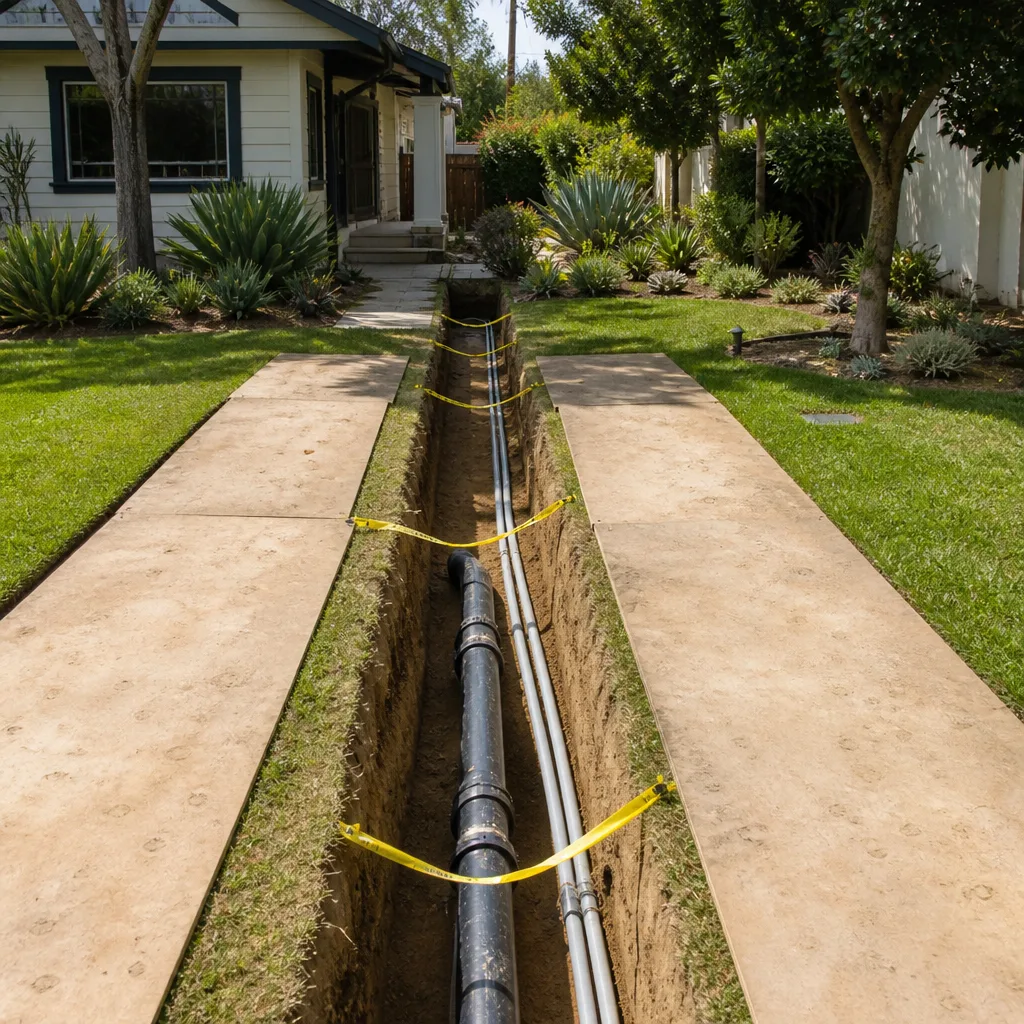
A properly compacted pad with good drainage lasts 20 to 30 years; a poorly prepped one can move within the first two. The concrete pad is typically the longest-lived element. The utility run lasts until the conduit or connections wear – usually decades if installed to code. Call (844) 797-4814 for an exact quote on your Whitney lot.
Sometimes, yes. A small settlement or a single low corner can often be re-leveled and re-graded instead of rebuilt. A cracked slab that has heaved, or an underground service run that’s failed, usually needs replacement. We’ll tell you honestly which you’re looking at – there’s no incentive to sell you a new slab if a repair will hold.
A gravel pad is typically a one-day job. A concrete slab needs a pour day plus curing before the shed goes up. Electrical runs vary with trench length. We give you a schedule in the written quote, and we don’t start until you’ve approved it.
We use code-compliant concrete, treated framing lumber, conduit, and breakers from established suppliers – no proprietary Tuff Shed parts are needed for site prep or utilities. The written quote lists every material so you know exactly what’s going into your project.
Whether you’re leveling an existing shed pad or setting up utilities for a new one, we can walk your Whitney lot and give you a straight price. We work with Tuff Shed owners and also service structures from Abodu, Cover, and Dvele. Every crew member is background-checked, identity-verified, and photo-badged – you’ll know their name and face before they arrive. Call (844) 797-4814 to schedule your free estimate.
Written by the team at Sutton ADU Builders Whitney, serving Whitney and nearby areas.