Last updated November 17, 2026
ADU Cost Breakdown: The Whitney Homeowner’s Reference for 2026
The most expensive line item in a Whitney ADU budget often isn’t construction. It’s the dirt. Site work, septic permitting, and utility extension routinely run $30,000 – $80,000 here before a single wall goes up, and most online calculators don’t account for any of it. A generic “California average” number tells a Whitney homeowner almost nothing, because Storey County rules, lot prep, and a thin subcontractor pool reshape the math in ways a national tool can’t see. This guide breaks down what an ADU actually costs in Whitney in 2026: pre-construction, hard and soft costs, per-square-foot ranges by unit type, and the rural multipliers that catch people off guard.
Quick Answer
A detached ADU in Whitney in 2026 typically runs $220,000 – $420,000 all-in, depending on site work and unit size, while a garage conversion lands closer to $95,000 – $180,000 and an attached addition $180,000 – $320,000. The construction itself is often the predictable part; the variable that moves your total most is pre-construction and site work, which can add $30,000 – $80,000 on a rural Whitney lot.
Table of Contents
- Why Generic ADU Calculators Miss the Mark in Whitney
- Pre-Construction Costs Whitney Homeowners Underestimate
- Construction Cost Per Square Foot by Unit Type
- Hard Costs vs. Soft Costs: Where the Money Goes
- The Rural Nevada Cost Multipliers
- Why a Written Locked Price Matters More in Whitney
- Paying for It: Financing and Value
- Common Mistakes to Avoid
Why Generic ADU Calculators Miss the Mark in Whitney
Type “ADU cost calculator” into a search bar and you’ll get a number built from metro data: Los Angeles, Seattle, Austin. Whitney isn’t any of those. It’s an unincorporated community in Storey County, and the realities of building here are different in ways that show up directly on your invoice.
Three things separate a Whitney ADU budget from a template estimate:
- Lot conditions. Many Whitney parcels sit on sloped or unpaved ground with well and septic rather than municipal sewer. Extending a sewer line or designing a new septic system is a line item a suburban calculator assumes is already handled.
- Contractor availability. The pool of licensed subcontractors serving Storey County is small. Fewer bidders means less competitive pricing and, sometimes, longer schedules that carry their own soft costs.
- Travel and delivery. Materials delivered to Whitney can carry a markup that a contractor working inside a denser market never pays.
In our experience working with homeowners across the Whitney area, the projects that go smoothly are the ones where the site work got priced honestly up front rather than discovered mid-build. If you want a sense of how we approach the full scope of an ADU project, our ADU Builders in Whitney page walks through the process from lot to certificate of occupancy.
Pre-Construction Costs Whitney Homeowners Underestimate
Before anyone frames a wall, you pay for information. On a rural lot, that information is more expensive than most people expect, and skipping it is how budgets blow up later. Here are the real ranges we see for pre-construction line items in Whitney.
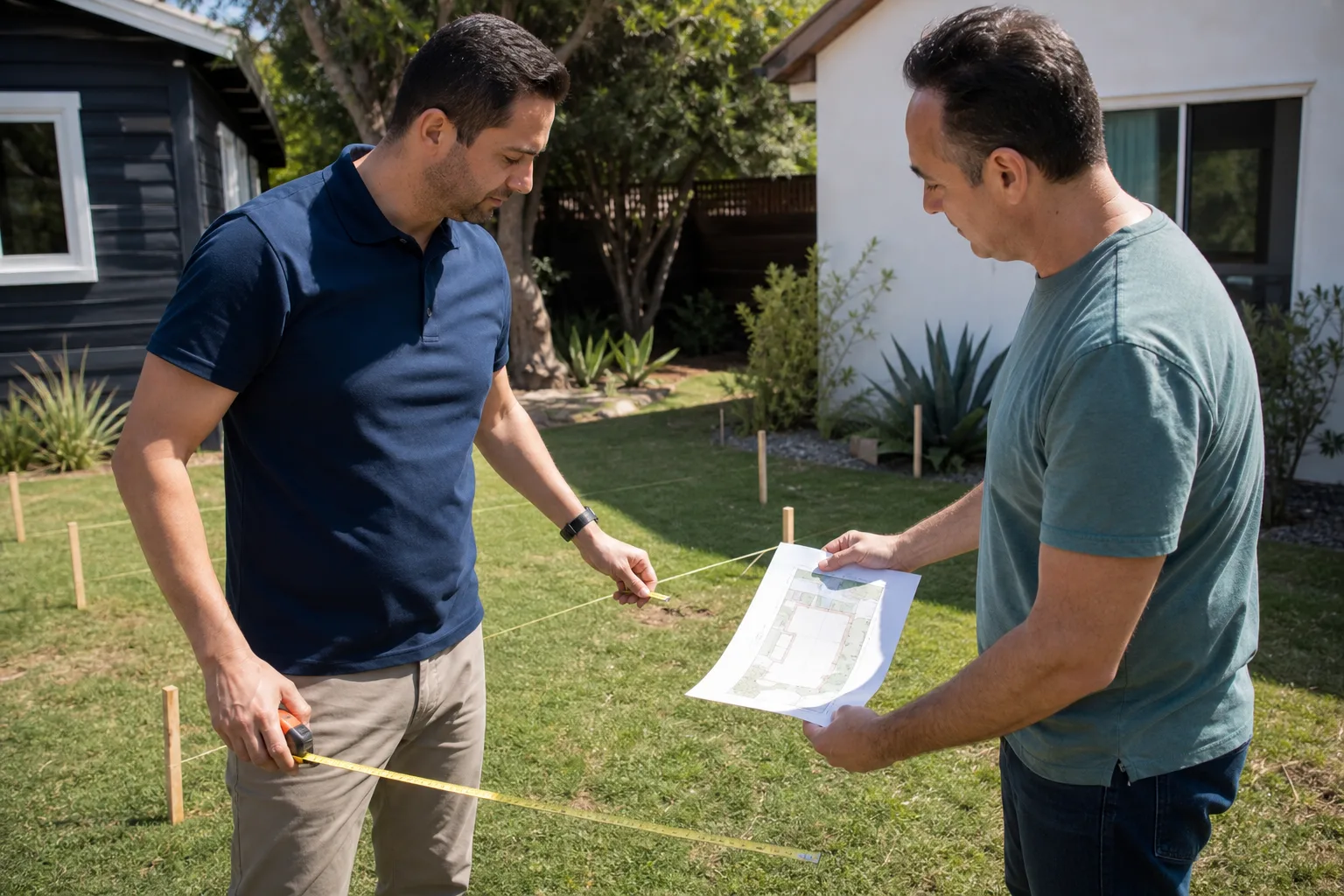
- Land survey: $1,500 – $4,500. Confirms your property lines, easements, and setbacks. On older Whitney parcels with informal fencing, this often reveals that the lot is not where you thought it was.
- Geotechnical report: $2,000 – $5,500. A soil study that tells the engineer what foundation your ground can support. Sloped or fill-heavy lots make this non-negotiable.
- Septic design and permitting: $8,000 – $35,000. This is the big one on lots without sewer. A new system sized for an ADU involves percolation testing, design, county review, and installation, and pricing swings widely with soil and setback conditions.
- Utility extension fees: $5,000 – $30,000. Running power, water, and gas to a detached unit can mean trenching, new meters, and connection fees. Distance from the existing service drives the number.
- Architectural and engineering plans: $6,000 – $18,000. Stamped drawings sized to the unit and ready for county review.
- Permit fees: $3,000 – $12,000, scaled to valuation and unit size.
The takeaway: a $30,000 – $80,000 pre-construction and site-work total is common on a Whitney lot. Budget for it first, and the rest of your numbers get far more reliable. A survey and geotech report also protect you from surprises that are far more expensive once concrete is poured.
Construction Cost Per Square Foot by Unit Type
Once site work is settled, construction cost depends on what kind of unit you’re building and its finish level. Here are honest 2026 ranges per square foot for three common paths in Whitney, with low, mid, and high bands.
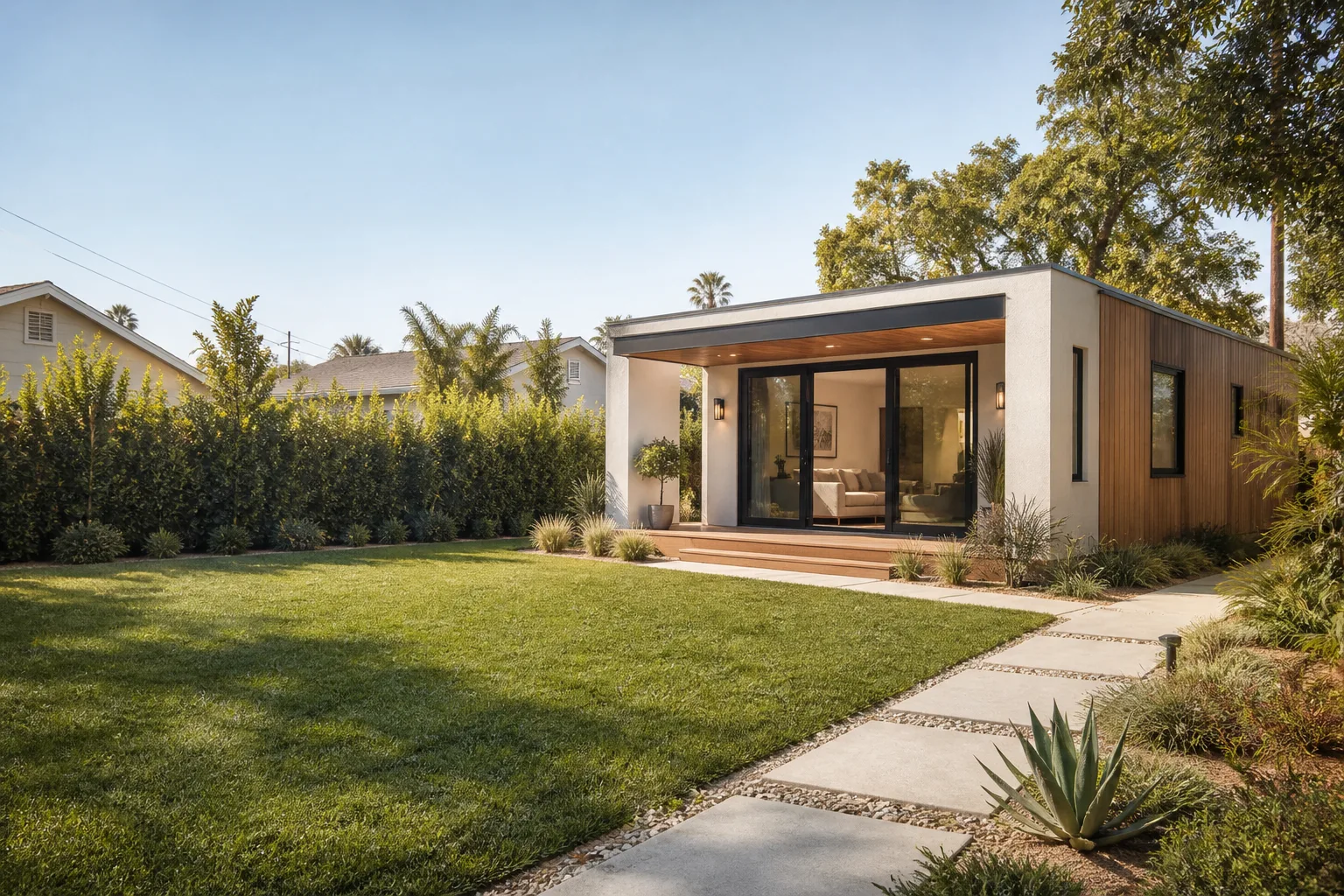
- Detached new build: $280 – $420 per square foot, mid around $340. A ground-up structure on its own foundation. Finish level, roofline, and whether it’s site-built or a prefab product move the number.
- Garage conversion: $140 – $260 per square foot, mid around $190. Reusing an existing shell is cheaper, but only if the garage has the ceiling height, foundation, and utility access to pass inspection. Converting often means new insulation, a slab assessment, and separate metering.
- Attached addition: $230 – $360 per square foot, mid around $290. Tying into the existing structure shares a wall and some systems, but matching rooflines, tying in foundations, and integrating HVAC add cost.
A 600-square-foot detached ADU at mid-range pricing lands near $204,000 in construction before site work. Add a realistic Whitney site-work budget and you’re at $250,000 – $350,000 all-in, which lines up with the totals we quoted up top.
Prefab and panelized products can shift these numbers. Working with a recognized product line like Plant Prefab or Abodu can compress the construction schedule, and a panelized wall system sometimes trims labor cost on the shell. The savings aren’t automatic, though: your lot still needs the same site work, foundation, and utility connections no matter how the box is built.
Hard Costs vs. Soft Costs: Where the Money Goes
It helps to split your budget into two buckets. Hard costs are the physical build. Soft costs are everything that lets the build happen legally and correctly. Here’s how the split typically looks on a Whitney ADU.
- Hard costs (roughly 65 – 75% of the total): Labor and materials. Framing, foundation, roofing, siding, windows, electrical, plumbing, HVAC, insulation, drywall, flooring, and fixtures. James Hardie cladding, for instance, sits in the materials line and carries a specific cost per square foot of wall.
- Soft costs (roughly 25 – 35% of the total): Design, engineering, survey, geotech, permits, inspections, septic design, utility connection fees, and contractor overhead and profit.
On a rural lot, soft costs trend higher than the national averages because of the survey, geotech, and septic work. A common mistake is to look at a $340-per-square-foot construction figure and assume that’s the whole project. On a Whitney build, the true all-in number is usually $60,000 – $120,000 higher once soft costs and site work are counted. The best way to see the whole picture before you commit is a line-item written estimate, which is exactly how we price every ADU project.
The Rural Nevada Cost Multipliers
Whitney’s location affects price in ways that don’t show up on a per-square-foot chart. These multipliers are worth understanding before you compare bids.
- Contractor travel time. Crews coming from Reno or Carson City factor drive time into their bids. A trade working inside a metro can service three jobs a day; in Whitney it might do one. That overhead lands in the quote.
- Material delivery markups. Lumber, concrete, and fixtures delivered to Storey County often carry a delivery surcharge that a contractor in a denser market doesn’t pay. On a full build, that can add several thousand dollars.
- A limited subcontractor pool. There are fewer licensed electricians, plumbers, and septic specialists actively bidding on Whitney work. Fewer bids means less competitive pricing and less leverage to negotiate. Expect the trades portion of your budget to run a bit above a metro equivalent.
- Inspection scheduling. Rural inspection calendars can be tighter, and a missed inspection window can stall a project. That delay carries a cost in holding time and crew rescheduling.
None of this means a Whitney ADU isn’t worth it. It means the budget has to reflect rural realities instead of a template. The same factors, incidentally, affect home additions and room additions, which is why our Home Addition Contractor in Whitney team prices site work the same careful way.
Why a Written Locked Price Matters More in Whitney
In a metro market, you can sometimes absorb a mid-project surprise because there are five other contractors who’ll re-bid. In Whitney, with a thin contractor pool, a price that drifts upward mid-build leaves you with few options. That’s why a written, locked price matters more here than anywhere.
A locked price should mean three concrete things in your contract:
- Scope is written line by line. Every allowance, every fixture, every line item spelled out before work starts.
- Change orders require your signature. No silent additions passed to the bill. If something changes, you approve it in writing first, with the cost attached.
- A written guarantee backs the work. Sutton’s 365-Day Done Right Promise covers defects in workmanship for one full calendar year from project completion. If it isn’t right, we make it right. And if any element of the build fails, a free second visit is included, no haggling.
We pair that with Threshold Verified crew standards: every technician who comes to your property is background-checked, identity-verified, and photo-badged, with their name and photo sent to you before they arrive. On a build that runs for months, knowing exactly who is on your lot matters as much as the price. Read more about how we handle the crew side of the job on our Sutton ADU Builders Whitney home page.
Paying for It: Financing and Value
Few Whitney homeowners write a $300,000 check. Most finance part or all of the build, and how you structure that affects your real cost.
- Home equity line or loan: Often the lowest-rate option if you have equity, and typically the simplest path for a detached ADU.
- Construction loan: Draws funds in stages as work progresses. Lenders for ADU construction are more available than a few years ago, though rural properties sometimes need a lender familiar with Storey County.
- Cash-out refinance: Folds the build into a new first mortgage. Worth comparing the rate against a standalone HELOC before deciding.
- Cash: Still the most common route on conversions and smaller additions.
On the value side, an ADU adds livable square footage and, in many cases, rental income potential that helps offset the financing. Appraisers have gotten more comfortable valuing ADUs, though a rural lot’s appraisal compares differently than a metro one. It’s worth a conversation with a local appraiser before you commit, so the return you’re expecting is grounded in Whitney comps rather than a statewide average.
Common Mistakes to Avoid
- Budgeting from a national calculator. A per-square-foot figure pulled from a metro market ignores Whitney’s site work, septic, and utility realities, which is exactly where the budget goes wrong. Price the site first.
- Skipping the geotech report to save $4,000. On a sloped or fill-heavy Whitney lot, that report is what tells the engineer which foundation you actually need. Skipping it risks a foundation that has to be redone, and that costs far more than the study.
- Assuming the garage is conversion-ready. Not every Whitney garage has the ceiling height, slab condition, or utility access to pass inspection as a living unit. Have it assessed before you count on the cheaper per-square-foot number.
- Accepting a verbal estimate. In a market with a thin contractor pool, an unwritten price is one you can’t hold anyone to. Insist on a written, line-item price before work starts.
- Forgetting the septic sizing. Adding an ADU can trigger a septic system review or upgrade because the system has to handle the added occupancy. That’s a routine $8,000 – $35,000 line item that surprises people who only planned for construction.
- Not asking who’s on the crew. On a multi-month build, unfamiliar trades arriving unannounced is a real concern for anyone home alone or with young kids. Ask up front whether the contractor backgrounds, verifies, and badging their technicians.
- Ignoring delivery and travel surcharges. Get the material delivery and crew travel costs baked into the written price, not bolted on later as “site conditions.”
When to Call a Professional
Some parts of an ADU are things you can research yourself. Others genuinely require a licensed professional, and getting that wrong is expensive or unsafe. Call a pro when you’re weighing a septic system for an added dwelling unit, when your lot is sloped or you’re unsure what the soil will support, when you’re converting a garage and need to know whether it passes inspection as living space, or when you’re running new electrical service to a detached structure. Electrical panels, gas lines, and septic work carry real safety stakes and belong to trained, licensed trades. If your goal is to add square footage and you want a written price before anyone lifts a tool, Sutton ADU Builders Whitney offers free estimates in Whitney – call (844) 797-4814.
Frequently Asked Questions
A detached ADU in Whitney typically runs $220,000 – $420,000 all-in, a garage conversion $95,000 – $180,000, and an attached addition $180,000 – $320,000, depending on site work and finish level. The biggest variable is pre-construction and site work, which can add $30,000 – $80,000 on a rural lot. Call (844) 797-4814 for an exact quote – estimates are free.
Rural lot conditions drive it: septic design, utility extensions, land survey, geotech, contractor travel time to Storey County, and a smaller subcontractor pool all push costs above a metro figure. The construction itself is often close to statewide averages; it’s the site work and rural multipliers that widen the gap. A written line-item estimate shows you exactly where your money goes.
It shouldn’t. A proper contract locks the written price and requires your signed approval for any change order, with the cost attached before work proceeds. In a market with fewer contractors to fall back on, that written protection matters more than in a metro. Ask for a line-by-line written price before you sign anything.
Yes. Permits are pulled and inspections are scheduled and passed as part of the project, and the soft costs for permits and inspections are part of your written price. County review timelines in Storey County affect scheduling, so building them into the plan up front keeps the project on track.
A garage conversion often runs three to five months, while a detached new build typically runs six to ten months including permitting and site work. Rural inspection scheduling and material delivery times can stretch a schedule, so a realistic timeline is part of an honest estimate. Ask for the schedule in writing alongside the price.
Sometimes. A recognized product line like Plant Prefab or Abodu can compress the construction schedule and standardize the shell cost, and a Tuff Shed conversion can be cost-effective for a smaller unit. But your lot still needs the same site work, foundation, and utility connections, so the savings depend on your specific parcel. Get the site work priced before assuming prefab is cheaper.
The Bottom Line
An ADU in Whitney in 2026 is a $220,000 – $420,000 project for a detached unit, or $95,000 – $180,000 for a garage conversion, and the number that moves most is site work: septic, utilities, survey, and geotech, which can add $30,000 – $80,000 before construction. Rural multipliers like contractor travel, delivery markups, and a thin subcontractor pool push costs above metro averages. The fix is simple: price the site first, get a written line-item price locked before work begins, and know exactly who’s coming to your property. For a home addition instead of a standalone unit, our Room Addition Contractor in Whitney team prices the same way.
Get Your Whitney ADU Priced in Writing
Every Sutton project starts with a written price before a single tool is lifted, a crew that’s background-checked and photo-badged, and the 365-Day Done Right Promise stamped on the finished work. If you’re planning an ADU, a garage conversion, or a room addition on a Whitney lot and you want real numbers instead of a calculator guess, call Sutton ADU Builders Whitney at (844) 797-4814 for your free estimate. We’ll price the site work honestly and give you the full picture before you commit.
Written by the team at Sutton ADU Builders Whitney.