
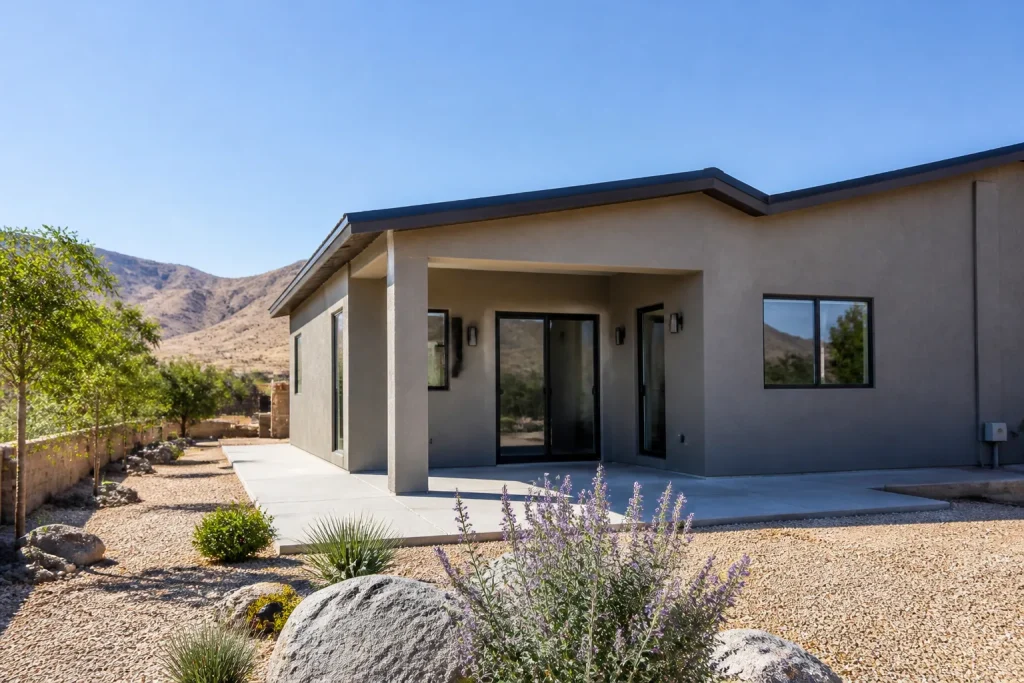
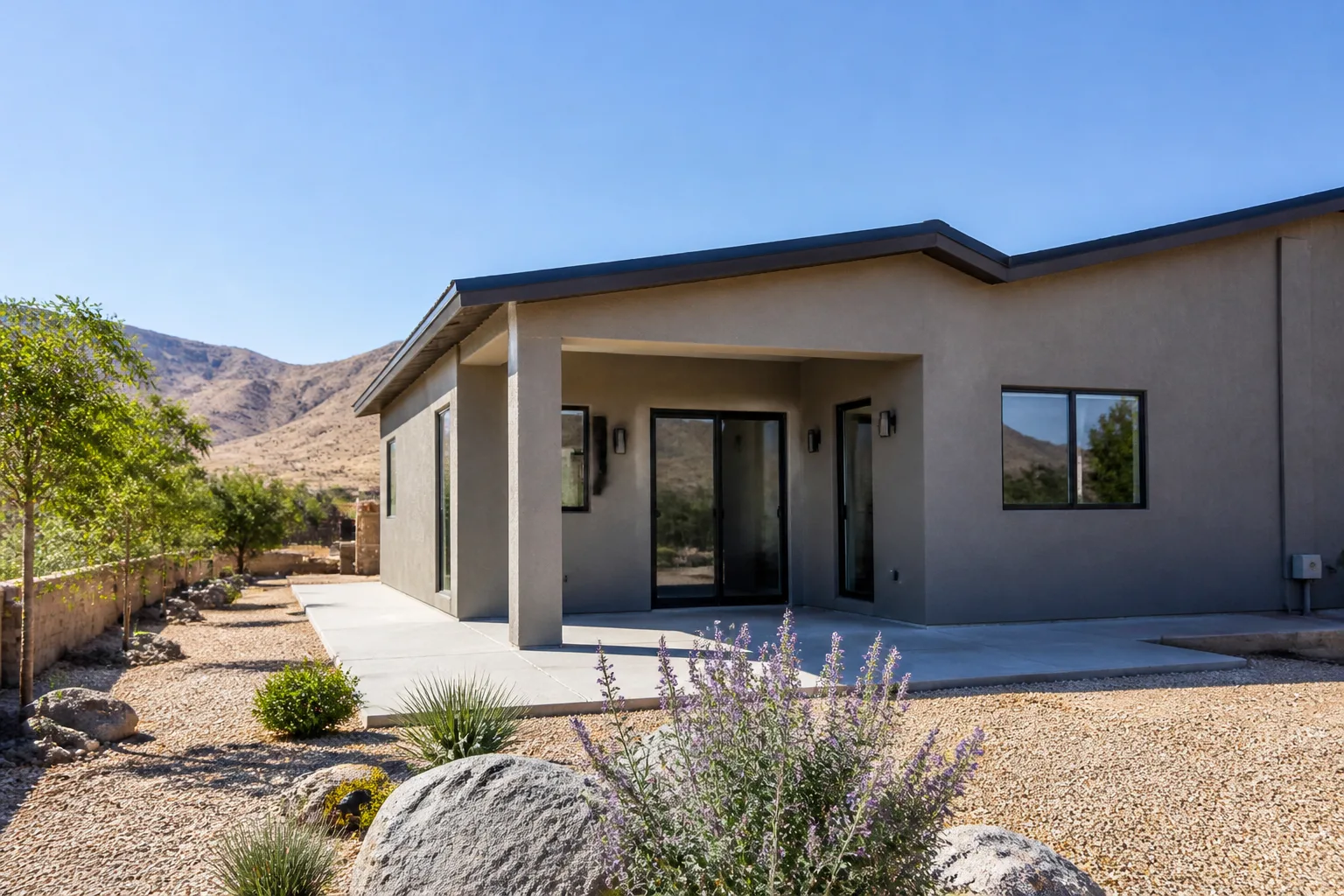
Dvele Home Addition Contractor in Whitney: A Homeowner’s Guide
Dvele builds a genuinely good prefab ADU. Their units show up on your lot roughly 90% complete, with the structure, systems, and finishes largely done in the factory. But 90% isn’t 100%. The remaining work, foundation, utility connections, tie-ins, and final inspection coordination, requires a licensed Nevada contractor on this property in Whitney. And that last 10% is where cost overruns and warranty disputes pile up. If you’d rather not sort through that alone, call (844) 797-4814 and we’ll walk you through it.
Here’s what most Whitney homeowners don’t hear before they sign a Dvele order: the factory warranty and the site contractor’s labor warranty are two separate things, and if the handoff between them isn’t coordinated correctly, both can get slippery. This guide covers the scope gap, the Nevada licensing you need to check, and how to protect the warranty on the module you’ve already paid for.
What Dvele Covers vs. What Your Site Contractor Handles in Whitney
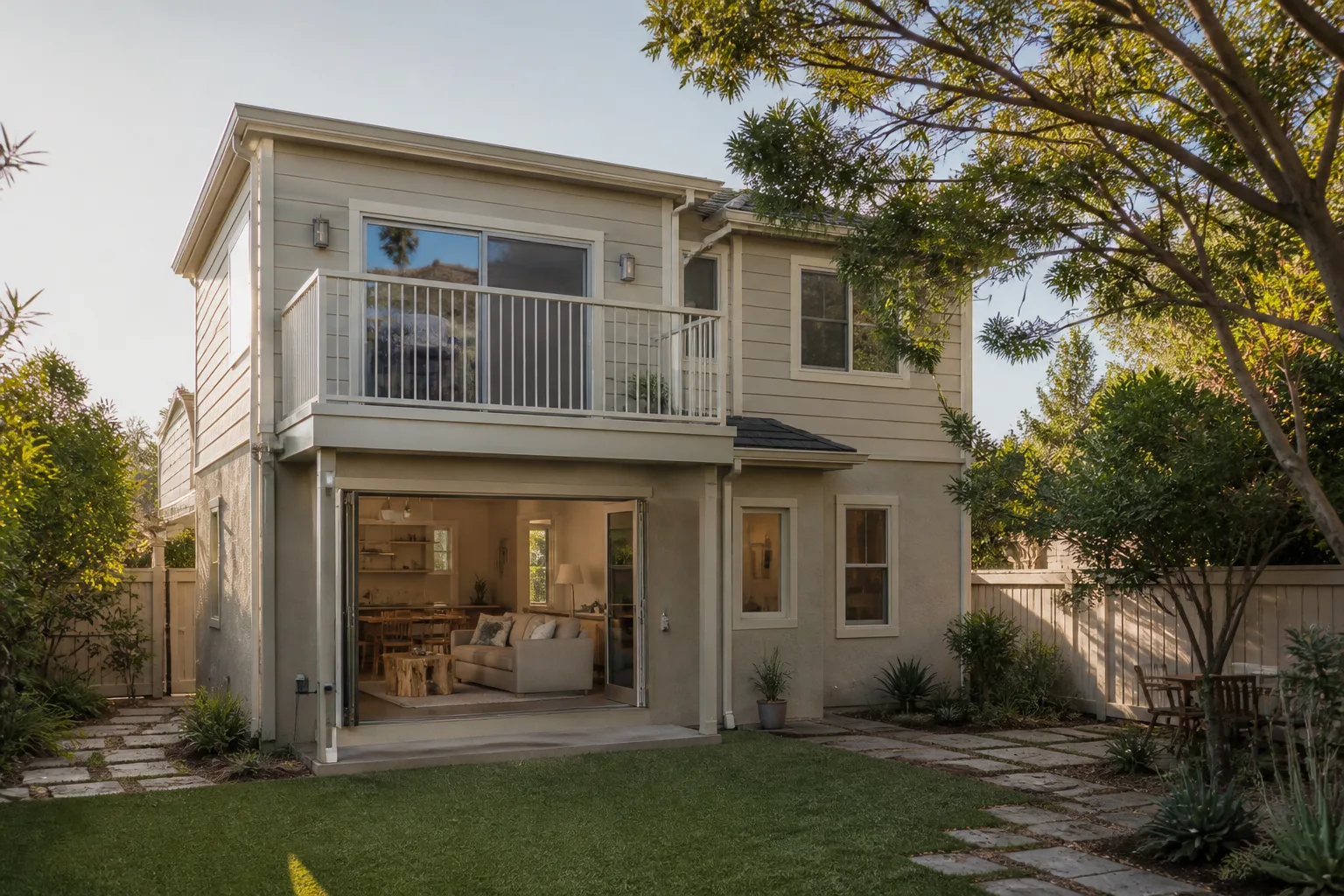
Dvele delivers a finished module. Your site contractor makes it livable on your lot. If nobody writes that boundary down, work falls into the gap between the two and you end up paying twice.
The module itself, framing, insulation, rough and finish electrical, plumbing inside the box, drywall, flooring, cabinets, windows, and the exterior shell, arrives complete from Dvele. Your site contractor takes over almost everything that touches the ground and the grid.
- Site prep and foundation. Grading, excavation, footings, and the stem wall or slab the module sits on. Dvele provides foundation specs, but a local contractor executes them, and in Whitney that often means dealing with caliche and hard desert soils that can slow excavation.
- Utility runs. Water, sewer or septic, gas, and electrical service from the meter or main to the module connection points. Whitney’s grid connections are governed by local utility and county rules, not the factory.
- Module setting coordination. The crane or hauler, the delivery window, street closures, and getting the unit landed onto the foundation without damaging it. This is a scheduled, high-risk moment that needs a contractor who’s done it before.
- Tie-ins and finish work. Connecting on-site utilities to the module’s stub-outs, closing gaps, exterior cladding and skirting, and making the finished unit weathertight on your lot.
- Permits and inspections. Pulling the site-work permits, scheduling inspections, and passing the final sign-off in Clark County.
Ask any contractor you interview to mark this boundary in writing. When the line is clear, nobody argues about who pays for the second trench or the extra gravel.
Nevada Licensing for Site Work on a Prefab ADU
Not every contractor who calls themselves a “general contractor” holds the right Nevada license classification for the site-work phase of a prefab installation. This is the detail that trips up Whitney homeowners who assume one license covers everything.
Nevada licenses contractors through the State Contractors Board, and the classification matters. A license valid for one type of work may not cover, say, the foundation, the electrical service, or the plumbing connections. On a Dvele project you’re often coordinating several licensed trades, plus the general contractor who holds the project together. Ask specifically:
- What is your Nevada license classification? A contractor should give you the classification and number without hesitation. If they hedge, that’s your answer.
- Which parts of this Dvele job does your license cover, and which are subbed? A good contractor will name the trades they’re bringing in.
- Is the subcontractor licensed too? The classifications for electrical, plumbing, and mechanical work are separate, and each should be current.
- Are you insured and bonded? Ask for the certificate, not the verbal claim.
In Whitney, where new ADU construction is more common than it used to be, a contractor who has coordinated Dvele deliveries specifically, not just generic construction, will know the inspection quirks that come with prefab. Our technicians have up to 20 years of experience with modular and site-built work, and it’s the kind of detail that separates a smooth handoff from a costly one.
How to Protect Your Dvele Warranty Through the Site-Work Phase
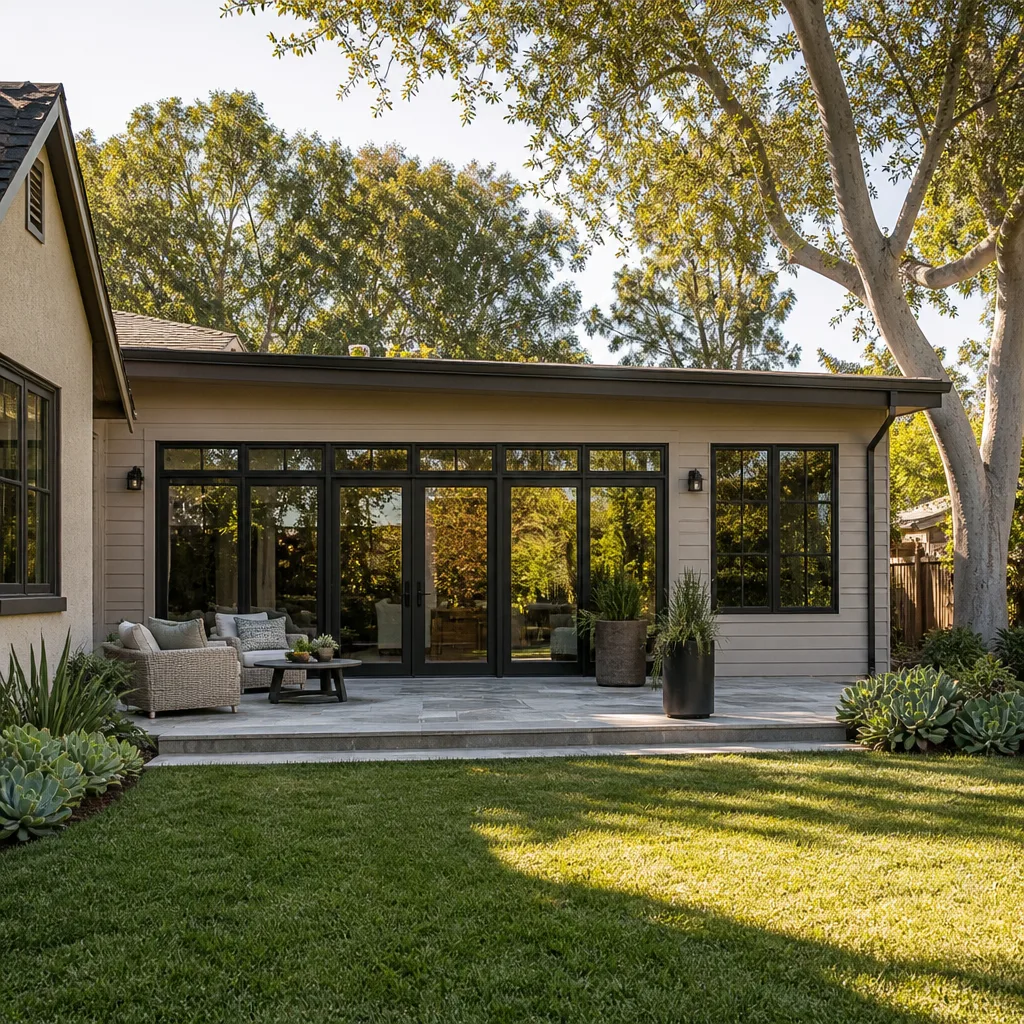
Dvele’s structural and systems warranty can be affected by how the module is handled, set, and connected on site. The coordination steps below are the ones that matter most, and skipping any of them is where warranty disputes begin.
Before delivery, your site contractor needs to confirm the foundation matches Dvele’s specs, including elevation and connection points. Damage that happens because a foundation was built a half-inch off becomes very hard to claim under warranty later. During delivery, the setting crew should document the condition of the module before, during, and after it’s landed, ideally with photos, so everyone agrees on what was already there versus what got damaged.
After delivery, the tie-in work needs to follow Dvele’s connection requirements exactly. If the plumbing or electrical is connected in a way the manufacturer didn’t specify, a future leak or fault can fall outside the warranty. Ask your contractor to follow the manufacturer’s connection documentation and to keep it on file.
One thing we’ve seen get missed: keeping a clean photo record of the module’s serial numbers, the delivery, and the connection points. If a warranty claim ever comes up, that record is what makes the difference. (A word of caution, since a Dvele install involves tipping a several-ton module onto a foundation: this is not a place for DIY. Setting and tie-in should only be done by a licensed, experienced crew.)
The Clark County Inspection Sequence for a Prefab ADU
Clark County runs a specific inspection sequence for prefab ADUs, and the site contractor needs to be physically present at several of those stages. Missing one can stop the project cold. The general order:
- Foundation inspection. Footings and the slab or stem wall are inspected after the ground work is done and before the module is set. The site contractor must be there.
- Utilities rough-in inspection. Electrical, plumbing, and mechanical rough work from the meter to the connection points is inspected before the module ties in.
- Module set inspection. After the module is landed and anchored, the county inspects the placement and anchoring.
- Final inspection. Tie-ins, finish work, and the completed unit are inspected for final sign-off, typically with the factory documentation Dvele provides.
In Whitney, the county’s inspection schedule can run tight during busy building months, so a contractor who knows how to sequence permits and inspections saves you weeks. Ask your contractor which inspections they’ll be on site for, and get it in writing. If a contractor can’t tell you the sequence off the top of their head, that’s a signal.
What Sutton’s Written Price Lock Covers in a Dvele Build

Here’s where we earn our keep. In a Dvele-adjacent project, the factory price and the site-work price are separate, and the site-work number is where surprise invoices usually appear. We give you a written price before any work begins, and that written price covers the site-work scope we’ve agreed on. No silent additions to the bill, no scope creep passed along quietly.
Our team works with the major prefab and modular product lines, Dvele among them, so the connection requirements and documentation aren’t foreign to us. That fluency matters at the handoff. When the delivery crew and the site crew cross paths on your Whitney property, our home addition contractor in Whitney team follows the Threshold Verified standard: every technician is background-checked, identity-verified, uniformed, and photo-badged, with their name and photo sent to you before they arrive, and they show ID at the door. When a factory delivery crew and our site crew overlap, you know exactly who belongs on your lot. If something we installed fails, our 365-Day Done Right Promise covers defects in workmanship for a full calendar year from project completion, and we include a free second visit if any element of the build needs a return trip.
When to Call a Pro (and How to Choose One)
If you’ve ordered a Dvele unit and it’s sitting on a truck or a lot waiting for a foundation, that’s the moment to call. Site work, foundations, utility runs, and inspection coordination are not homeowner jobs in Nevada, and the consequences of a mistake here are expensive. If you’re still deciding between an ADU and an addition, our ADU builders in Whitney guide and our room addition contractor in Whitney page break down the options and price ranges.
When you interview contractors for the site phase of a Dvele build in Whitney, ask three things: their Nevada license classification and number, whether they’ve set and tied in a prefab module before, and whether they’ll put the site-work scope and price in writing before anyone touches your lot. If all three are yes and the paperwork is clean, you’re in good shape. If any is missing, keep looking.
The Bottom Line
Dvele handles the box. Your site contractor handles the ground, the connections, and the inspections that make it legal to live in. The single most important thing you can do in Whitney is get the scope boundary, the Nevada licensing, and the inspection sequence nailed down in writing before delivery day, because that’s where warranty and cost disputes come from. If you’re in Whitney and need help, Sutton ADU Builders Whitney offers free estimates – call (844) 797-4814. Our Sutton ADU Builders Whitney home page is a good starting point too.
Frequently Asked Questions
No. Dvele’s warranty covers the module itself. The foundation, utility connections, and site work fall under your site contractor’s workmanship warranty. That’s why the handoff between the two needs to be coordinated and documented.
A valid Nevada State Contractors Board license with a classification that covers the specific work being done. Because an ADU install spans foundation, electrical, plumbing, and mechanical trades, each part needs appropriate licensing. Ask for the classification and number before you hire.
It depends on foundation type, utility runs, and inspection scheduling, but the site phase typically runs several weeks before delivery and several more after, once the module is set and tie-ins are finished. A contractor who knows the county inspection sequence can keep it tight.
Not on a written, line-item price. At Sutton, every homeowner gets a written price before work begins, and that price covers the agreed scope. Ask any contractor for the same in writing before you sign.
Written by the team at Sutton ADU Builders Whitney.
Need ADU Help?
Call Sutton ADU Builders Whitney - licensed & insured, here with fast after-hours help in Whitney.
(844) 797-4814