Last updated November 17, 2026
Home Addition Contractor Warning Signs Every Homeowner Should Know
A contractor who answers every concern with “don’t worry, we do this all the time” is telling you something important. Not that the work will go smoothly, but that skipping documentation has become normal to them. The dangerous red flags on a home addition are rarely dramatic. They’re quiet procedural shortcuts, each one small enough to excuse on its own, that stack up into a contractor who won’t have your back when something goes wrong three months in. This guide covers the signs experienced homeowners catch and first-timers miss, with the specific contract language, insurance checks, and payment structures that separate a builder who protects you from one who protects themselves. It’s written from Whitney, where additions come with their own local quirks.
Quick Answer
The biggest warning signs of a bad home addition contractor are procedural, not personal: they discourage job site visits, they hand you a vague estimate instead of a fixed written price, they can’t name the subcontractors entering your property, they take a large deposit before work starts, and they treat “we do this all the time” as a substitute for documentation. Any one of these is worth a second conversation. Two or three together is your signal to walk.
Table of Contents
- Why a Contractor Who Discourages Job Site Visits Is a Red Flag
- The Contract Language That Signals Price Inflation Ahead
- How to Actually Verify a Contractor’s Insurance
- When a Contractor Can’t Name the Crew on Your Property
- The Payment Schedule That Protects You vs. the One That Doesn’t
- Vague Estimates, Missing Line Items, and the Written Price Standard
- Permits, Inspections, and Whitney-Specific Code Signals
- Common Mistakes to Avoid
- When to Call a Professional
- Frequently Asked Questions
Why a Contractor Who Discourages Job Site Visits Is a Red Flag
The first time a contractor suggests you stay away from your own construction site “for safety,” it sounds reasonable. The second time, it starts to feel like policy. By the third, you’re looking at a builder who has made a habit of running jobs you can’t see.
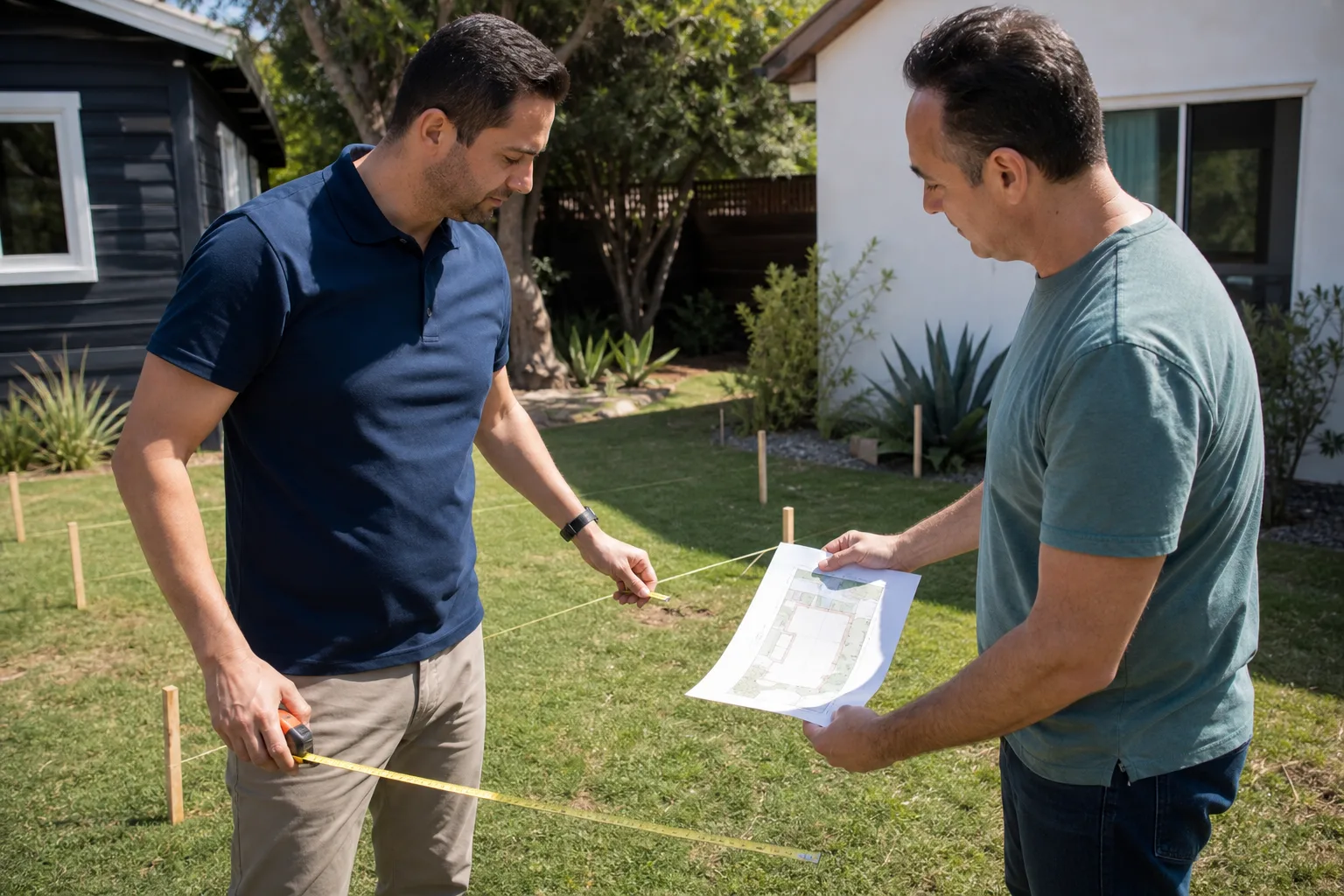
There is a legitimate safety element on any active build. Framing areas with open floor joists, temporary electrical runs, and roof work in progress are genuinely hazardous to walk through without a hard hat. A good contractor will still set a time for you to visit safely, walk you through progress, and answer questions on site. A bad one treats your presence as interference.
Why it matters for an addition specifically: home additions and room additions hide most of their work behind drywall. The framing, the waterproofing, the rough-in plumbing, and the electrical all disappear once the walls close. If you’re not seeing those stages, you’ll never know what you actually got until it fails.
Watch for these specific behaviors:
- Excuses every time you ask about visiting (“we’re at a critical stage,” “the crew doesn’t like being watched,” “we’ll do a walkthrough at the end”)
- No written schedule with defined inspection milestones you’re invited to
- Photos of progress that only show finished surfaces, never framing or rough-in
- Resistance to you hiring a private third-party inspector at defined stages
In our experience across Whitney, we’ve watched homeowners accept “we’ll show you photos” for a garage conversion and later discover the photos were taken weeks apart and skipped the framing entirely. Both the interior insulation and the exterior stucco patch pattern told a different story once they moved in.
If you want to understand what a properly managed job looks like from the first day to inspection, it’s worth reading the process detail on our Home Addition Contractor in Whitney page before you sign anything. A builder confident in their work shouldn’t fear a homeowner with a phone camera.
The Contract Language That Signals Price Inflation Ahead
The line that costs homeowners the most money isn’t the total bid. It’s the paragraph about change orders buried on page four.
A change order is a formal amendment to the contract that adjusts price, scope, or schedule. Legitimate change orders exist and aren’t a warning sign on their own. Nobody can predict every discovery inside a wall. But some contractors write contracts engineered to produce a stream of change orders, and the price you signed turns into an opening bid rather than a final number.
Here is the specific contract language to watch for:
- “Owner to provide” clauses scattered through the scope. These look cooperative. They’re a way to carve items out of the fixed price, so anything from soil testing to utility trenching gets billed back to you later.
- “Allowances” without caps. A $3,000 window allowance sounds generous until you learn your Whitney home’s wind exposure requires specific glazing that runs $1,200 higher per unit, and that overage comes straight out of your pocket.
- “Time and materials for unforeseen conditions” with no defined ceiling. Every build has unforeseen conditions. A contract that lets the contractor bill T&M for anything they categorize as unforeseen has no fixed price at all.
- “Contractor reserves the right to substitute materials of equal or greater value.” Vague. Ask for a written substitution list pre-approved in the contract.
- No line-item scope. If the contract says “frame the addition” without a spec sheet, you have nothing to hold against the final bill.
The counter is a written price before any work begins, delivered line item by line item, with change-order rules spelled out: who can initiate one, how it gets priced, and what happens if you decline. No surprise invoices, no scope creep passed silently to the bill. That’s the standard we hold to at Sutton ADU Builders Whitney, and it should be the floor for any builder on your lot.
If you want to see what a fixed-price scope document actually looks like in this market, our Room Addition Contractor in Whitney page walks through a real example.
How to Actually Verify a Contractor’s Insurance
A contractor handing you a certificate of insurance proves one thing: they have a PDF printer. It does not prove the policy is current, that it covers the type of work they’re doing on your property, or that it stays in force for the length of the project.
Most homeowners check step one and stop. There are five steps, and skipping four of them is how people end up with a lien on their house or a lawsuit from a subcontractor’s injured worker.
- Ask for the certificate with the broker’s name and phone number. No broker contact, no verification. A legitimate certificate always lists the issuing agency.
- Call the broker and confirm the policy is active today. Not last month. Not the date on the certificate. Today.
- Confirm the coverage types. General liability covers damage to your property or someone else’s person during the build. Workers’ compensation covers the crew if they’re injured on your site. Commercial auto covers their vehicles. If any one of those is missing, you are exposed.
- Check the policy expiration against your project timeline. A policy expiring in six weeks on a five-month addition is a gap waiting to happen. Ask for a binder extending coverage through completion.
- Request that you be listed as an additional insured. This is free and standard. If a contractor resists, that resistance is telling.
The Nevada climate adds a wrinkle. Whitney sits in an environment where exterior work moves fast between heat and wind, and crews work long days on ladders in both. Injury risk on exterior cladding and roofing is not abstract here. If the workers’ comp certificate doesn’t explicitly name the trade or classification that covers exterior carpentry, ask why.
Any builder you hire should hand you this paperwork without a sigh. If they treat an insurance question like distrust rather than due diligence, that’s the answer to your question.
When a Contractor Can’t Name the Crew on Your Property
Ask a contractor who will actually be on your property during the build. If the answer is “the guys” or “my team,” push harder. If they still can’t name names, you have a security problem on your hands, not just a customer service one.
Home additions run for months, and crews cycle through your yard, your side gate, and the path past your kitchen window. For anyone home alone during the day, parents with small children, or older homeowners who plan to be present for much of the build, that matters.
The information you should be able to get before signing:
- The name of every subcontractor responsible for each trade (framing, electrical, plumbing, HVAC, drywall, finish carpentry, exterior)
- Whether each subcontractor carries their own insurance and in what amounts
- Whether the contractor uses background-checked crews or a rotating list of whoever is available
- Whether you’ll receive names and photos of the people coming, in advance, or just a knock at the door
Too many contractors operate on the theory that the homeowner shouldn’t need to know who’s on site. That’s how sketchy subcontracting gets normalized in a market. It’s also how a homeowner discovers a crew member with a criminal background standing in their backyard six weeks into the build with no recourse.
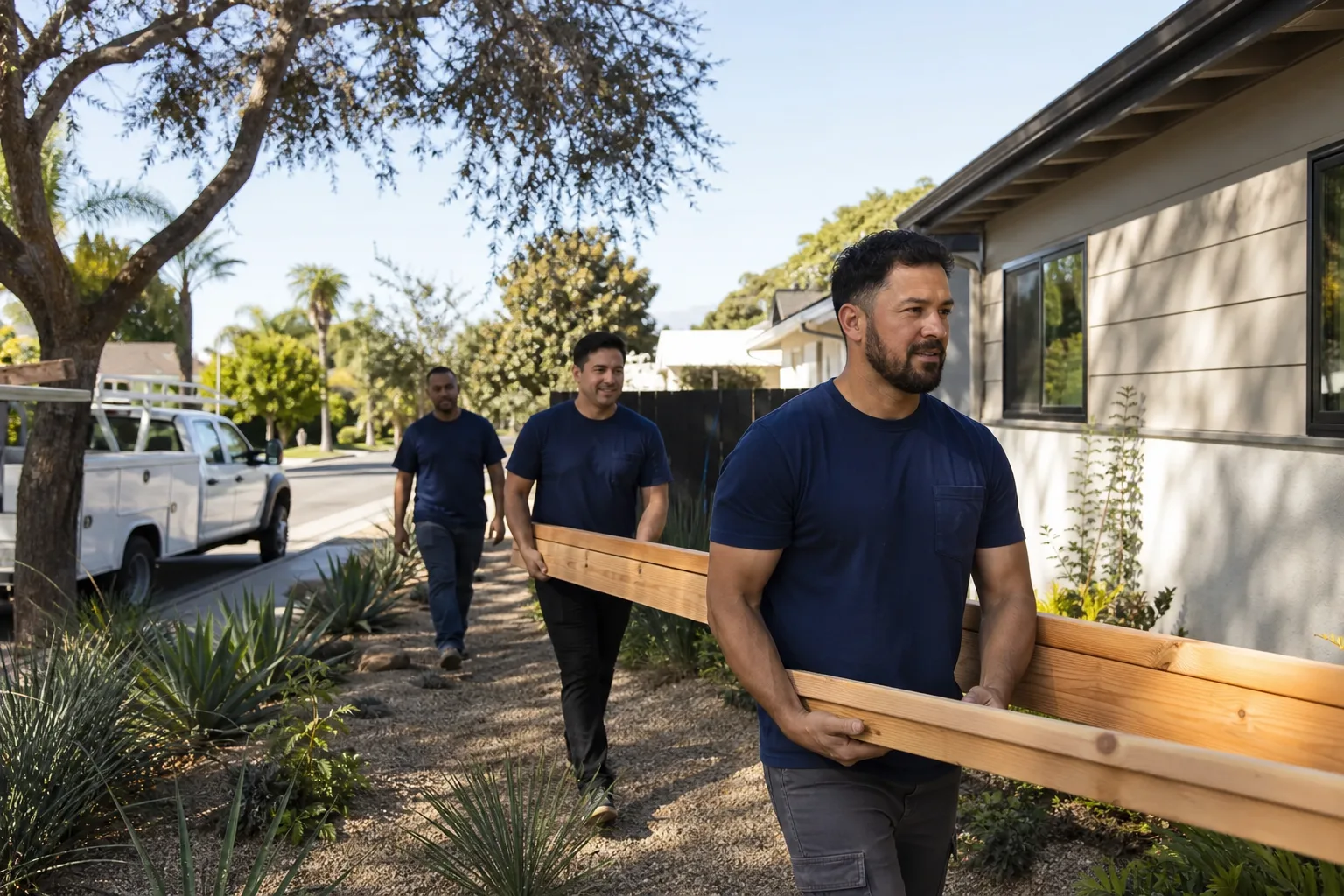
The standard we hold to at Sutton ADU Builders Whitney is Threshold Verified: every technician is background-checked, identity-verified, in a uniform, and photo-badged, with their name and photo sent to you before they arrive. You should expect nothing less from any builder you let into your yard, and asking for that standard up front is not being difficult.
The Payment Schedule That Protects You vs. the One That Doesn’t
The payment schedule is the single biggest piece of contractual leverage you have. It’s also the piece most homeowners sign without reading closely, because the number at the bottom looks right and the total divided into even installments feels fair.
It’s usually the opposite. Here’s the structure that protects you, and the one that doesn’t.
The structure that protects you
- A modest deposit, typically 10%, to lock the schedule and order long-lead materials
- Progress payments tied to specific completed milestones, not calendar dates
- A meaningful final payment of 10% to 15% held until final walkthrough, punch list completion, and inspection sign-off
- A retention or guarantee period after completion, during which you can call out defects and the builder makes them right
The structure that doesn’t
- A large upfront deposit, 30% or more, before any material is ordered
- Payments scheduled evenly across the calendar regardless of progress
- A small final payment with no defined completion standard
- Deposit requested in cash, or paid to a personal account instead of a business account
Here’s the trap. A homeowner who pays 40% up front has given the contractor leverage. If work stalls, the homeowner has no financial leverage to compel completion and no clear contractual mechanism to walk away with money recovered. That’s the story behind most unfinished additions, not contractor fraud but a payment structure that removed the homeowner’s ability to enforce anything.
What’s the counter? Every project we run at Sutton ADU Builders Whitney is backed by the 365-Day Done Right Promise, which covers defects in workmanship for one full calendar year from project completion. If something fails, we come back and make it right, with a free second visit included if a repair or element of the build fails. That only means something if the final payment isn’t already spent before the work is done. Structure your contract accordingly.
Vague Estimates, Missing Line Items, and the Written Price Standard
An estimate and a written price are not the same thing. This is the source of more homeowner pain than any other single confusion in the addition space.
An estimate is a forecast. Estimates are what contractors hand you when they haven’t priced the actual scope yet, or don’t want to. A written price is a commitment. It lists every line item, every allowance is defined, every substitution requires your sign-off, and the number you sign is the number you pay unless you approve a change order in writing.
Signals that you’re looking at an estimate dressed up as a price:
- The total is a single number without categories
- Materials, labor, and permits aren’t broken out separately
- The word “approximately” appears next to the total
- No explicit statement about who pays for permits or plan review
- Nothing about how change orders are priced and approved
- No exclusions list (what the price does NOT include)
In Whitney, this surface-level estimating habit is especially costly because of two local realities. First, soil conditions in parts of the valley require engineered foundations that a generic bid won’t carry. Second, the wind exposure and summer heat here push exterior material specs (James Hardie cladding specified at the right thickness, correct fastening, proper stucco assemblies) into categories where cutting corners shows up within a season or two. A vague bid hides both problems until they become change orders.
Ask for a fixed written price with line items. If the contractor won’t produce one, you’re not negotiating, you’re guessing. For a look at how the written price standard plays out on a real addition, see our ADU Builders in Whitney page.
Permits, Inspections, and Whitney-Specific Code Signals
If a contractor suggests skipping the permit to “save time and money,” remove them from consideration immediately. It’s not a shortcut. It’s a decision that puts the value of your addition and, in many cases, your ability to sell the home later, at risk.
Permits are the paper trail that proves your addition exists legally. Without one, an appraiser may not count the square footage, a buyer’s lender may flag the structure as unpermitted, and your insurance may balk at a claim tied to unpermitted work. In Whitney and the surrounding Clark County jurisdiction, permits also trigger the inspection sequence that catches problems early: foundation, framing, rough-in electrical, rough-in plumbing, insulation, and final.
Warning signs around permits:
- The contractor says permits are “not required” for an addition in your area. They are. Additions of any size need plan review and inspection.
- They offer to “handle the permit under the radar.” This isn’t generosity. It’s a liability transfer.
- No mention of inspections scheduled in the project timeline. Inspections are the heartbeat of a legal build. If they’re not in the schedule, they’re not happening.
- The contractor can’t produce permit numbers on request. Any legitimate builder pulls permits in their business name and shares the numbers with you.
- Exterior work on a lot where HOA rules apply, with no HOA approval step in the contract. Whitney has HOAs with specific design review requirements for any visible addition.
The question isn’t whether the contractor will pull permits. It’s whether the permits will be pulled in the contractor’s name (so the inspections fall on them to pass) or yours (so they don’t). Always the former.
Common Mistakes to Avoid
- Signing a contract without a line-item scope. A lump-sum number gives you nothing to hold against the final bill when the contractor bills for “extras” you thought were included. Insist on the written price with categories.
- Paying a large deposit in cash or a personal account. Cash removes your paper trail and your negotiating leverage in a single move. Always pay a business account, and always in amounts tied to milestones.
- Accepting “we do this all the time” as reassurance. In our experience across Whitney, that phrase more often marks a contractor who has normalized undocumented shortcuts than one who has mastered the process.
- Never visiting your own job site. Every hidden problem in a home addition happens behind a wall. If you’re not seeing the framing, the waterproofing, and the rough-in, you’ll never know what’s behind the drywall until it fails.
- Not calling the insurance broker. A certificate is a piece of paper until you’ve confirmed the policy is active, covers your project type, and stays live through completion. That phone call takes minutes and protects you for the life of the build.
- Skipping the subcontractor list. Any builder who can’t name the electrical, plumbing, and framing subs before signing is a builder who isn’t resourcing your project deliberately. In Whitney, where a summer addition drags crews through heat and wind, deliberate resourcing matters.
- Treating the final payment as a formality. The last 10% to 15% is your only financial leverage if the punch list isn’t cleared and inspections haven’t signed off. Hold it until the work is done and the paperwork is complete.
When to Call a Professional
Some of these warning signs are worth a conversation. Some are worth walking away from. The line is usually crossed when two or three appear at once, or when any single one shows up in writing.
Call a professional for a second opinion when: a contractor hands you a vague estimate with no line items; the payment schedule demands more than 15% before work starts; the contractor can’t name the subs; the insurance certificate doesn’t check out with the broker; or you’ve been told you don’t need permits for an addition in Whitney. Each of these is fixable with a different contractor, and none of them get fixed by signing anyway.
Sutton ADU Builders Whitney offers free estimates, with a written price before any work begins and a Threshold Verified crew standard on every project. If you already have a bid in hand and something about it feels off, call (844) 797-4814 and we’ll talk through what you’re looking at. No pressure, no pitch. Just a second read on a document that will shape your next year.
Frequently Asked Questions
The biggest single warning sign is a contractor who won’t put a fixed, line-item written price in the contract before work starts. That absence lets every later “extra” become your problem, and it’s the one thing that reliably predicts a project where the final cost drifts far from the opening number. If a builder can’t commit to a written price, they’re not actually quoting your project. Call (844) 797-4814 for a written price on a Whitney addition.
Most ground-up room additions in the Whitney area run in the $275 – $475 per square foot range for standard construction, which puts a 400-square-foot room addition somewhere between $110,000 and $190,000 before site work. Detached ADUs typically run higher per square foot due to foundation and utility runs. Call (844) 797-4814 for an exact quote. Estimates are free.
No. A deposit above about 10% of the contract value before any material is ordered is a red flag, not a courtesy. Progress payments should be tied to completed milestones you’ve seen, with 10% to 15% held until final walkthrough and inspection sign-off. A contractor who needs 30% up front has shifted the financial risk onto you. Call (844) 797-4814 to see what a defensible payment schedule looks like.
The certificate alone is not enough. Call the broker listed on it and confirm the policy is active today, covers the right trades, and extends through your project’s expected completion. Also ask to be listed as an additional insured. This takes minutes and protects you from the most expensive category of contractor mistake. For help understanding coverage for a Whitney addition, call (844) 797-4814.
No. There are real safety concerns at certain build stages, and a good contractor will set up safe times for you to see progress. Refusing access altogether is a red flag, because most of an addition’s quality is hidden behind drywall. If you can’t see the framing and rough-in phases, you’ll never know what you actually got. Call (844) 797-4814 if you want a builder who welcomes a homeowner walkthrough.
The 365-Day Done Right Promise covers defects in workmanship for one full calendar year from project completion, with a free second visit if a repair or element of the build fails. It’s a named, written guarantee, not a verbal assurance, and it only works alongside a payment schedule that keeps your leverage until final sign-off. Call (844) 797-4814 to see how the promise applies to a Whitney addition.
The Bottom Line

The dangerous warning signs on a home addition aren’t the loud ones. They’re a contractor who discourages job site visits, a contract written to quietly produce change orders, an insurance certificate nobody called the broker to confirm, a crew list that can’t be produced by name, and a payment schedule that hands the leverage to the builder. Each one looks small. Together, they predict the project that stalls, the bill that balloons, and the addition that never quite gets finished. Verify the paperwork, keep the leverage, and walk away from anyone who resists either. In Whitney, the right builder should make the checklist easy.
Sutton ADU Builders Whitney home is where you can see how we handle a project from the first walkthrough to the 365-Day Done Right Promise, with a Threshold Verified crew on every job and a written price before any work begins. If you’re still evaluating contractors, call (844) 797-4814 for a free estimate and a straight read on your project.
Written by the team at Sutton ADU Builders Whitney.