Last updated November 17, 2026
ADU Builders Warning Signs Every Homeowner Should Know
The most dangerous sentence an ADU builder can say isn’t a lie. It’s this: “We’ll figure out the final price once we’re into the walls.” It sounds reasonable. It sounds flexible. What it actually means is that you’re about to fund an open-ended project with no exit and no ceiling. In our work across Whitney, we’ve learned that the red flags that predict real disaster rarely show up as dramatic confrontations. They show up as evasions in conversation and gaps in paperwork that feel minor at the time. This guide names the exact phrases, document gaps, and verification steps that should end the conversation, so you can tell the difference between a builder who’s busy and one who’s hiding something.
Quick Answer
The biggest warning signs when hiring an ADU builder are: vague verbal estimates that never become line-item written contracts, a refusal to disclose subcontractor licenses, pressure to pay a deposit and set a start date before plans are permit-ready, and no way to verify who is coming onto your property. Any one of these is a reason to slow down. Two or more is a reason to walk away. Verifying a Nevada contractor’s license, bond, and insurance through the Nevada State Contractors Board takes under five minutes and eliminates most of the risk before you sign anything.
Table of Contents
- The Vague Estimate vs. the Vague Contract
- “We’ll Figure Out the Price Once We’re Into the Walls”
- Unlicensed Subcontractor Disclosure: What It Looks Like and Why It Matters
- Too Fast to Start: The Deposit-and-Start-Date Trap
- How to Verify a Nevada Contractor in Under Five Minutes
- The Crew Identification Problem
- Permit Signals You Can Read in the First Meeting
- The Contract Terms That Reveal Everything
The Vague Estimate vs. the Vague Contract
Here’s a distinction that saves homeowners a lot of grief: a rough verbal estimate at first contact is normal. A contractor who still can’t produce a line-item written contract after a site visit is not.
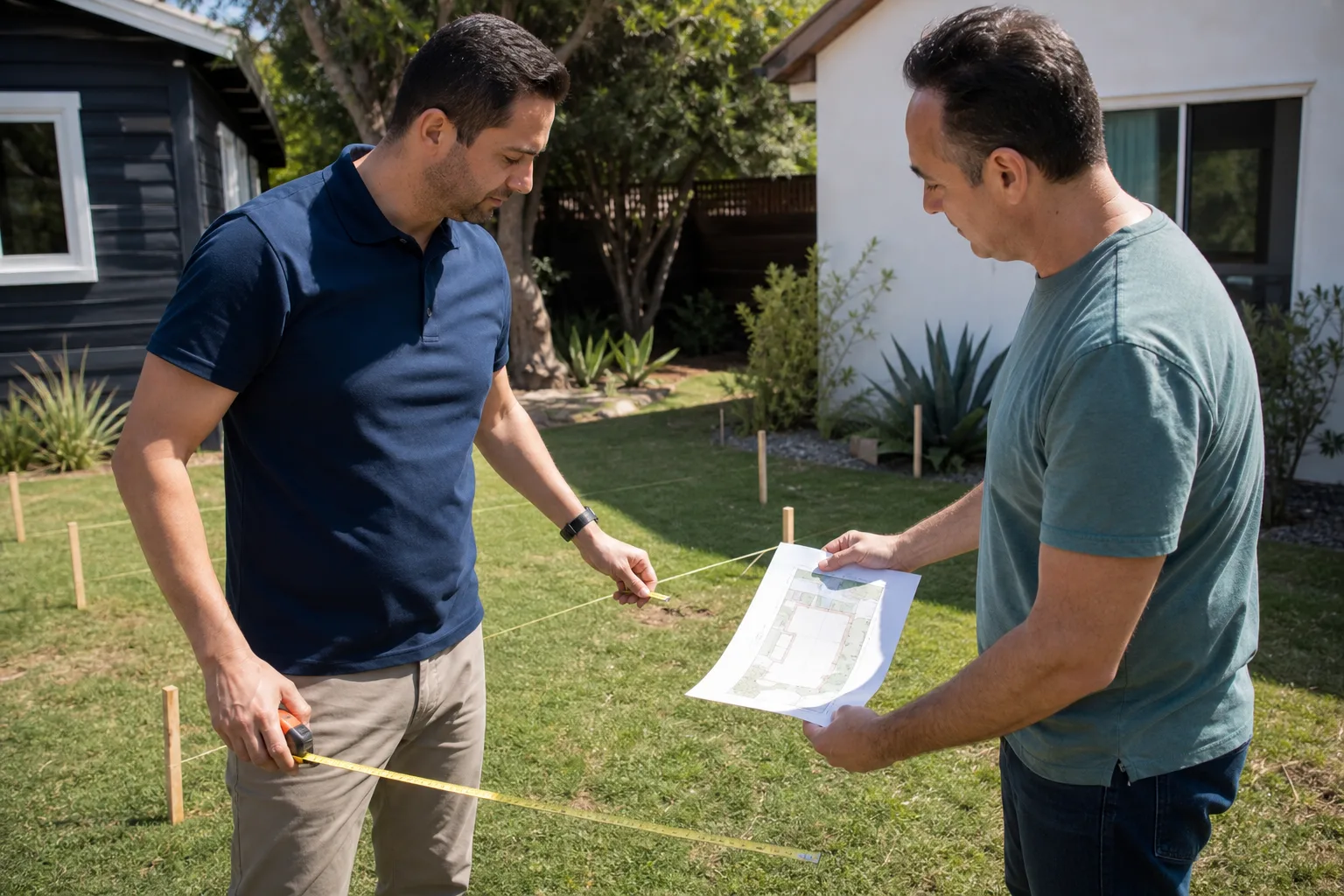
Early conversations are about whether the project is feasible and roughly what it costs. Nobody expects a bound document at the first handshake. A certified line-item estimate (an itemized written scope with materials, labor, permits, and site work priced separately) comes after the contractor has walked your lot, checked setbacks, and understood whether you’re doing a detached ADU, a garage conversion, or a room addition.
What separates an honest builder from a risky one is whether that written document actually materializes. Ask directly: “Can you show me a sample line-item contract from a recent project?” A legitimate Whitney ADU builder will hand one over without flinching. A contractor who stalls, deflects, or offers to “get you something” that never comes is telling you the truth about how they run projects.
A line-item written contract should show, at minimum:
- Site work broken out separately: grading, utility trenching, foundation, and connection fees
- Permit and inspection costs as line items, not lumped into “miscellaneous”
- Which windows, roof material, and cladding system are specified (James Hardie or a named alternative)
- A stated allowance for any item that can move with market pricing, with a cap
- Payment schedule tied to completion milestones
- A named written warranty on workmanship
If your contractor can’t show this, you may be looking at a builder who quotes from memory and bills from the hip. Our ADU Builders in Whitney page explains what a proper written price looks like before work starts, and it’s worth reading alongside this guide.
“We’ll Figure Out the Price Once We’re Into the Walls”
This phrase is the single most reliable predictor of an ADU project turning into a financial horror story. “We’ll figure out the price once we’re into the walls” (or its close cousins, “we’ll work it out as we go,” and “we’ll do a cost-plus so it’s fair”) means there is no number you can budget against. You’ve agreed to fund whatever comes up.
We understand why it happens. Opening a wall in an older garage conversion in Whitney sometimes reveals surprise; a rotten sill plate, an undersized electrical panel, or insulation that isn’t what the label claimed. A conscientious builder plans for those contingencies and builds a stated allowance into the contract. A shaky one uses the possibility of surprises to avoid committing to any number at all.
A written price locked in before work begins is not a luxury; it’s the baseline. If your contractor won’t put a number on paper that protects you, the burden of cost overruns lands entirely on you.
Three questions that open the door if you hear this phrase:
- “What percent of your projects have come in over the original written contract, and what’s your process for approving any change in writing before it happens?”
- “Can you show me the allowance line items in your contract and the maximum they can reach?”
- “At what point does a surprise or change get approved in writing, and who signs off?”
Notice none of these are confrontational. But they force the issue. A builder who has the answer will give you one. A builder who doesn’t will get vague fast.
Unlicensed Subcontractor Disclosure: What It Looks Like and Why It Matters
ADU construction is often performed by multiple trades; framing, electrical, plumbing, and mechanical. In Nevada, licensed general contractors are required to either perform that work under their own license or disclose the licensed subcontractors who will be on your job. If no disclosure appears anywhere in your contract or scope, that’s a warning.
The reason goes far beyond quality. It’s your liability. If an unlicensed sub is injured on your property or performs work that fails an inspection, the exposure can come back to you. Your homeowners insurance may not cover work performed by unlicensed parties. And an unlicensed trade’s defective work can leave you holding the permits and the repair bill.
Here’s what the disclosure should look like, in plain language:
- A list of subcontractors by trade with their Nevada license classification and number on file
- Confirmation that every sub carries its own general liability and workers’ compensation coverage
- A clause stating the general contractor indemnifies the homeowner against unlicensed work performed on the project
Ask what license classifications the contractor holds and which sub-trades they rely on. You’re not staging an audit; you’re having the conversation every builder should be comfortable with when their paperwork is clean. If the answer is “we hire good guys,” and nothing appears in the document, “good guys” isn’t a verification category; it’s a hope. Our Home Addition Contractor in Whitney page explains what written scope and licensing commitments look like on a legitimate addition.
Too Fast to Start: The Deposit-and-Start-Date Trap
Speed sounds like a virtue in construction. It usually isn’t. The warning sign is a contractor who pushes for a significant deposit and a start date before your plans are permit-ready.
ADU plans in Whitney require residential permit review, and yard placement may trigger setback (the required distance between your new structure and the property line) and grading considerations. Those aren’t delays. They’re the legal steps that make a structure insurable and legal. A contractor who wants your deposit today and a crew at your door Monday, before plans have been reviewed and approved, is skipping steps that protect you, not being efficient.
Proper sequence, from a builder who isn’t cutting corners:
- Site visit and feasibility check (setbacks, utility locations, lot coverage)
- Design finalized and submitted to the jurisdiction
- Plan review and permits issued
- Written contract signed with a stated start window
- Deposit due only after permits are in hand and contract terms are agreed
We mention Whitney’s permit review specifically because homeowners who’ve done a room addition here know how much the jurisdiction cares about the details. A builder who has done projects here will walk you through the sequence before you’ve paid anything. A builder who hasn’t may discover the steps for the first time after you’ve signed.
How to Verify a Nevada Contractor in Under Five Minutes
You can verify any Nevada general contractor in about the time it takes to make coffee. The Nevada State Contractors Board maintains a public lookup. Here’s the step-by-step, so you can do it before your next conversation.
- Go to the Nevada State Contractors Board website and open the license lookup.
- Search by the company’s business name and by the name of the person who will be your point of contact.
- Confirm the license status is active, not expired, suspended, or “not qualified.”
- Read the classification listed. It tells you what kind of work the contractor is actually authorized to perform.
- Check the bond listed. It should be active and current for the scope of work.
- Look for any complaint or disciplinary history in the record.
- Confirm they carry general liability and workers’ compensation insurance. Ask for a certificate of insurance, and verify it’s current.
Five minutes. That’s the difference between trusting a business card and knowing exactly who you’re hiring. Do this before you sign anything, and never assume a contractor’s license is current because a subcontractor told you so. If the lookup is empty, if the classification doesn’t match the work being done, if the bond has lapsed, or if you can’t get a current certificate of insurance, you don’t have a builder; you have a risk.
The same discipline applies to prefab ADUs, which we’ll cover below. Buying an Abodu, Dvele, or similar product from a manufacturer doesn’t exempt the installation team from licensing and bonding requirements.
The Crew Identification Problem
If you don’t know who is coming to your property before they arrive, that’s not normal. That’s a gap, and it’s your job to close it, explicitly, in writing.
ADU projects mean multiple crews on your property over weeks; framers, electricians, plumbers, HVAC technicians, and site workers. For many homeowners, particularly people who are often home alone, parents with young children, or older homeowners managing a build with no one around during the day, this is a real concern. It’s also a solvable one. Ask for it in writing.
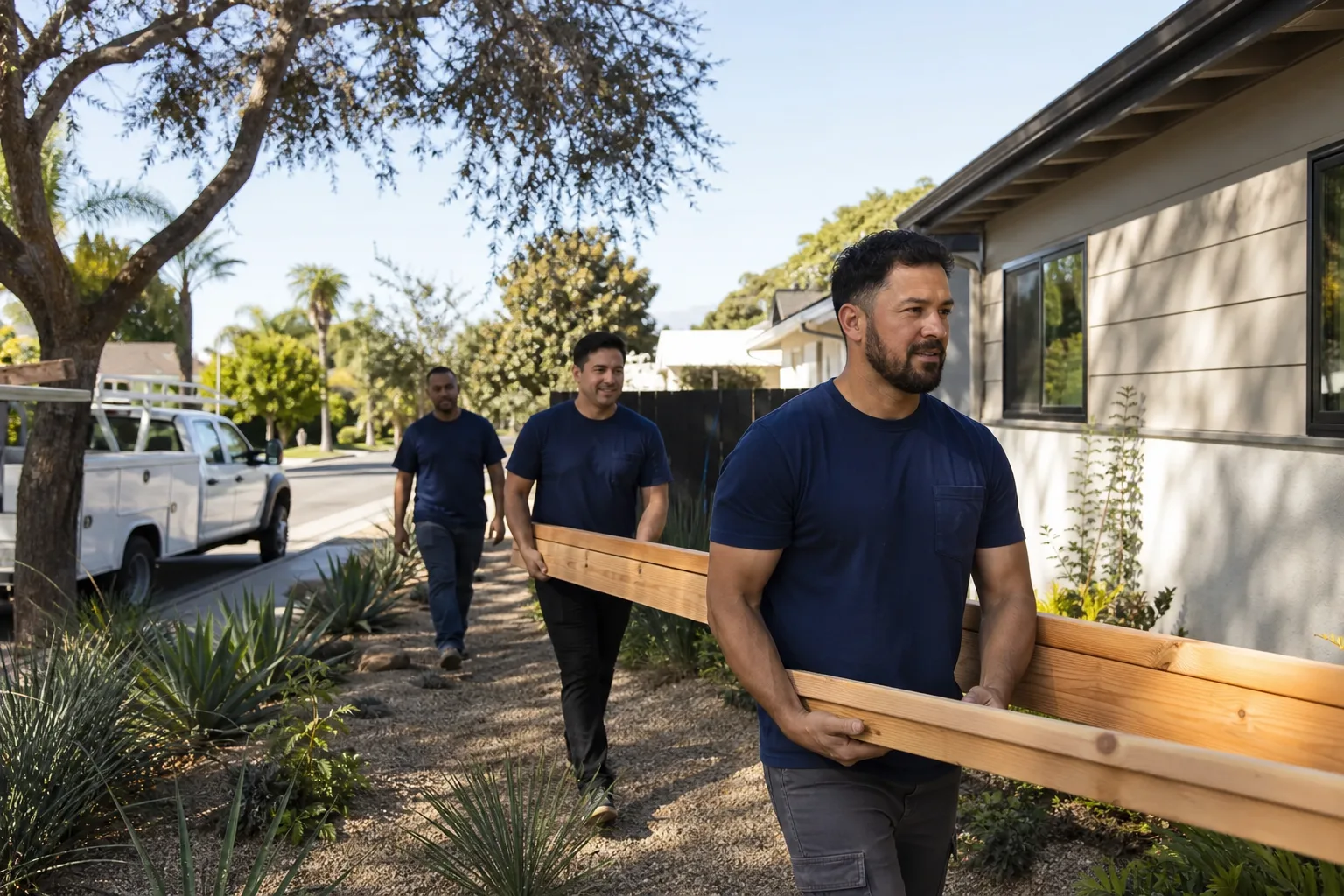
Under the Threshold Standard (the crew vetting framework we use), every technician who sets foot on your property is background-checked and identity-verified; their name and photo are sent to you before they arrive; they show a photo ID badge at the door; and they wear a clean, marked uniform. That isn’t a policy that gets announced on a sign; it’s a system you can ask any builder to match. Here’s the question: “Will you send me the name and photo of every person who will be at my property before they arrive, and can they show a photo ID badge?”
A confident contractor will say yes. A contractor who looks uncomfortable has told you everything. This is the single warning sign homeowners skip most often because it feels rude to ask. It isn’t. You’re asking a professional to prove who’s coming to your property, and any builder worth hiring will happily comply. The Threshold Verified standard exists precisely because this gap is so common and so rarely named.
Permit Signals You Can Read in the First Meeting
Permits aren’t paperwork; they’re the record that your ADU is legal, insurable, and complies with local code. How a contractor talks about them tells you more than any brochure.
Warning signs in the first conversation:
- The contractor suggests skipping the permit because it’ll save time or money; that’s a red flag with teeth. Unpermitted ADUs can complicate your resale, affect insurance, and force teardown if the local jurisdiction requires it.
- They can’t explain the sequence of inspections on a Whitney ADU project.
- They treat set back requirements as negotiable or “something we can work around later.”
- They can’t describe how a grading or drainage issue could affect permit approval on your lot.
Positive signals: the contractor can name the local jurisdiction and describe how reviews typically flow, mentions drainage and setback requirements before you do, and shows you sample inspection reports from completed projects. Someone who’s done this before in the area speaks about code the way a local speaks about the weather; without effort, and without hedging.
If your plans are with a prefab provider, the same expectation applies. James Hardie cladding or a prefab module from Abodu doesn’t change the permit sequence. The installation team runs the final steps. See our Room Addition Contractor in Whitney page for how the permit path looks on an addition.
The Contract Terms That Reveal Everything
Once you have a written contract in your hands, you’re in a much stronger position. Before you sign, look for these specific details. A builder who runs a clean operation will have them all in plain language.
Look for a payment schedule tied to defined milestones (plans approved, foundation complete, framing complete, final inspection passed), never a large lump sum upfront with no defined work behind it. Look for a stated allowance on any expense that can move. Confirm the contract names who is responsible for pulling permits and who pays for re-inspection if something fails. Confirm the warranty terms are written into the contract, not stated verbally.
Our own written commitment, the 365-Day Done Right Promise, covers defects in workmanship for one full calendar year from project completion. If any element of the build fails, we return at no charge. That guarantee is stamped on every project, not spoken in the meeting. A legitimate contractor’s written warranty will be similarly plain, and it will name what it covers and for how long.
If the contract doesn’t name a workmanship warranty, don’t assume one exists. Ask. If the answer is “we always take care of our customers,” ask for it in writing. Any commitment that isn’t written down belongs to the contractor’s memory, and memories fade.
Common Mistakes to Avoid
- Signing before you verify the license. The Nevada State Contractors Board lookup takes five minutes and costs nothing. If the record is empty or expired, walk away now.
- Accepting a verbal estimate as a written contract. A rough estimate is fine early on. But if you’re at the signing stage and still working from a verbal number, that’s the gap that predicts cost overruns.
- Paying a deposit before permits are approved. Deposits belong after plan review, not before. A contractor pushing for money and a start date while your plans are still in review is skipping steps.
- Never checking subcontractor licensing. Ask for the license classification and number for every trade. It’s a question a real builder welcomes and a bad one deflects.
- Assuming the crew is who they say they are. Everyone on your property should be background-checked and identity-verified, with photo ID presented at the door. It’s a reasonable ask, and the Threshold Verified standard is what it looks like when a builder takes it seriously.
- Skipping the sample contract. Ask any contractor to show you a recent line-item contract and a sample inspection report. It’s a fair question, and their comfort with it tells you whether they’ve done this before.
- Not getting the warranty in writing. Verbal commitments disappear when the crew leaves. A written workmanship warranty protects you for a full year; ask for it in plain terms before signing.
When to Call a Professional
You’re ready to call when you’re serious about adding square footage and want a written price and a scope of work before you spend anything. You’re ready when you have a rough lot idea and want a feasibility check before committing a dollar. You’re ready when you’ve been burned by a vague estimate and want to see a line-item contract from a crew whose names and photos will be sent before they arrive. And you’re ready when your plans are with a prefab provider and you need local installation guidance and permit sequencing.
Sutton ADU Builders Whitney offers free estimates in Whitney, backed by a written price before any work begins, a 365-Day Done Right Promise on workmanship, and Threshold Verified crews who arrive uniformed and photo-badged with their name and photo delivered to you in advance. We work with recognized product lines including Abodu, Cover, Dvele, Mighty Buildings, Plant Prefab, and Boxabl, and we’ll tell you honestly which one fits your lot. Call (844) 797-4814 to schedule your free estimate.
Frequently Asked Questions
A typical detached ADU in Whitney runs roughly $180,000 to $320,000 before site work, with garage conversions and smaller units landing lower and larger two-bedroom units landing higher. Site work, utility trenching, and permit fees are separate line items and can vary significantly depending on lot conditions. Prefab units from brands like Abodu or Cover can price differently from a stick-built ADU. The only number that matters is the written, line-item estimate for your specific lot. Call (844) 797-4814 for an exact quote; estimates are free.
No; if you have a written line-item contract with stated allowances, the price doesn’t move unless a genuinely unforeseeable condition appears, and even then any change must be approved in writing before work proceeds. A builder who says the price will “work itself out once we’re into the walls” has given you no ceiling and no protection. The safe question to ask is: “What’s the maximum my cost can reach, and what triggers a change?” Then get it in writing. Call (844) 797-4814 to see a sample written contract.
Yes. Permits are part of the scope of work, not an optional add-on, and they are line-itemed in the written contract so you know what’s been submitted and what’s been approved. Skipping permits on a Whitney ADU makes the structure unpermitted, which can complicate resale and insurance. The permit sequence (site check, plan review, approval, inspections) should be described to you before you sign anything. Call (844) 797-4814 to schedule a free estimate and we’ll walk you through the permit path on your lot.
Timeline depends on the type (detached ADU, garage conversion, or room addition), plan review time with the local jurisdiction, and whether the unit is prefab or stick-built. Prefab units (e.g., from Abodu, Cover, or Dvele) can compress on-site construction time because the module is built off-site; the local steps (site work, foundation, utility connections) still run on their own schedule. A written contract should state a realistic start window and milestone schedule. Call (844) 797-4814 for a project-specific timeline.
Use the Nevada State Contractors Board lookup, search by company name and point of contact, and confirm active status, correct license classification, current bond, and any complaint history. Ask for a current certificate of insurance for general liability and workers’ compensation. Ask for a sample line-item contract and a sample inspection report. All of this takes about five minutes and eliminates most of the risk. Call (844) 797-4814 and ask us these questions directly; we’ll answer them all before you’ve spent a dollar.
Every technician is background-checked and identity-verified, arrives uniformed and photo-badged, and has their name and photo sent to you before arrival. That’s the standard you should expect from any ADU builder working on your property in Whitney. If a contractor can’t confirm who’s coming, that’s a warning sign you should close before signing anything. Call (844) 797-4814 to discuss what that looks like on your project.
The Bottom Line
The warning signs that matter most in ADU hiring aren’t dramatic. They’re paperwork gaps and conversational evasions. A vague price that never becomes a written contract. A deposit demanded before permits. No disclosure of which subcontractors are licensed and insured. And a crew whose identity is unknown to you until they’re in your driveway. Any one of those is a reason to slow down. Two or more is a reason to walk. A written price, a line-item contract with allowances, an active Nevada license you’ve verified, and a crew you can identify in advance are the four anchors that protect you. If you can’t get all four, call (844) 797-4814 and we’ll help you find the right build for your lot. Start with our Sutton ADU Builders Whitney home overview, or explore our full service range on our ADU Builders in Whitney page.
Written by the team at Sutton ADU Builders Whitney.