Last updated November 17, 2026
Choosing the Right ADU Brand: A Buyer’s Guide for Whitney
A modular ADU brand that performs beautifully in coastal California can quietly fail in Whitney. We’ve seen standard spec packages ship with siding rated for moderate UV exposure, HVAC systems sized for mild summers, and foundation designs that assume soil nothing like the caliche that sits under much of the Whitney area. The word “brand” makes the choice feel like picking a car. In practice, it’s a decision about speed, local code compliance, and whether a structure will still be sound after fifteen years of 100°F Julys. This guide walks through the three ways ADUs actually get delivered, the questions to ask any prefab manufacturer, how Nevada’s factory-built approval process differs from a site-built permit, and where the warranty gap between brand and builder tends to bite.
Quick Answer
Choosing the right ADU brand in Whitney means matching a delivery model to your lot and climate, not picking the most polished website. Prefab and modular manufacturers bring speed but fixed specs that may not suit high-desert UV, heat, and soil conditions, while site-built custom construction adapts to your specific site and moves through the same local inspection channels every Whitney inspector already knows. The brand’s warranty and the installing contractor’s warranty are two different documents, and you need both in writing before you sign.
Table of Contents
- The three delivery models for ADUs, explained plainly
- How to test a prefab brand’s spec against Whitney’s climate
- Nevada’s approval process for factory-built structures
- What brand warranties cover versus what your installer covers
- The case for site-built custom construction in Whitney
- Questions to ask any ADU brand before you commit
- What ADU brands cost in the Whitney market
- Common mistakes to avoid
The Three Delivery Models for ADUs, Explained Plainly
Every ADU you can buy falls into one of three buckets, and the difference matters more than the logo on the brochure. Here’s how they actually work.
1. Prefab and modular (built in a factory, delivered as finished modules)
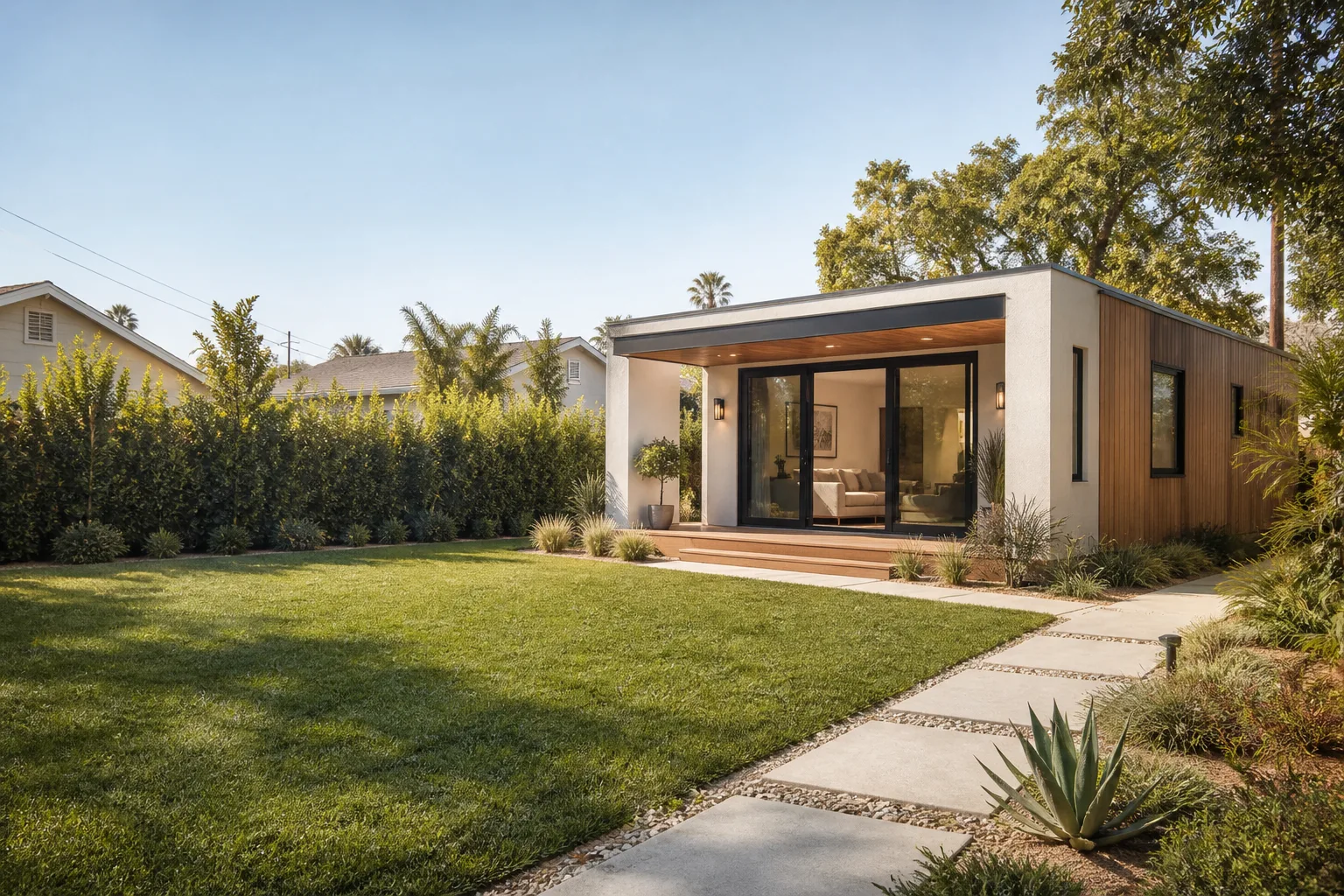
The manufacturer builds complete modules in a climate-controlled plant, trucks them to your lot, and a crane sets them on a foundation. Brands like Abodu and Cover have made this model popular because it’s fast and predictable. You get a finished box. What you don’t get is much flexibility on dimensions, finish, or how the unit meets your specific soil conditions. Timeline is often shorter than site-built, but site work, utility trenching, and foundation prep still happen on your lot and can stretch the schedule. In our experience, the “weeks not months” claim usually refers to factory time, not the whole project.
2. Panelized and kit systems
Panelized construction ships walls, floor, and roof panels flat, then assembles them on site. Brands like Dvele work in this space. You get more design flexibility than a finished module and more factory precision than stick framing, but assembly still requires a skilled crew and a crane or lift, and your local inspector has to sign off on the assembly. Cost often lands between prefab and fully site-built.
3. Site-built custom construction
Everything is framed, wired, plumbed, and finished on your property by trades who work in Whitney regularly. It’s the slowest option on paper and the most flexible in practice. You can adapt to a rocky lot, angle the unit for afternoon shade, and change a window location without voiding a factory spec. This is the model Sutton ADU Builders Whitney works in, and it’s the one that gives you the most control over how the finished structure handles the local climate. If you want to compare the two paths side by side, our ADU Builders in Whitney page lays out the full scope.
How to Test a Prefab Brand’s Spec Against Whitney’s Climate
Whitney sits in a high-desert pocket with brutal summer sun, wide day-to-night temperature swings, and soil that isn’t forgiving. A prefab brand built for coastal California can look identical on paper and still underperform here. When you’re shopping, ask these questions in writing:
- What’s the UV rating on the exterior cladding? Standard fiber-cement and vinyl products vary widely in how they hold up to intense sun. Ask for the manufacturer’s UV exposure rating and the warranty terms specific to fading and chalking. James Hardie systems have a strong track record in high-sun markets, but confirm the exact product line the brand specifies, not just the brand name.
- What’s the HVAC tonnage and how was it calculated? A system sized for a 75°F average summer will run constantly and short-cycle in a 100°F Whitney July. Ask for the Manual J load calculation, not a rule-of-thumb number.
- Is the foundation engineered for expansive or caliche soil? Many prefab foundation packages assume standard compacted soil. Whitney’s caliche layers can require different footing depths and pier designs. Ask whether the brand’s engineer has reviewed a soil report for your specific lot.
- How is the roof insulated, and what’s the attic ventilation plan? High-desert heat loads punish under-ventilated roofs. Ask for the R-value and the vent strategy.
- What’s the window glazing spec? Low-E, double-pane, and solar heat gain coefficient numbers matter more here than in a mild climate.
If a manufacturer can’t answer these five questions in writing, that’s your answer.
Nevada’s Approval Process for Factory-Built Structures
This is the part most buyers don’t learn until they’re already committed. Factory-built and modular structures in Nevada go through a different approval path than site-built construction, and the difference can add weeks to your timeline if you don’t plan for it.
- State-level approval of the factory. The manufacturer’s plant and design must be approved under the state’s factory-built housing program, and the unit carries a state insignia. This is separate from your local building permit.
- Local permit for the site work. Your foundation, utilities, and any site improvements still go through the local building department, with inspections at the same stages as site-built work.
- Coordination between the two. The state-approved design and the local site permit have to line up. If your lot needs a foundation design outside the brand’s standard package, that change may need engineering review on both sides.
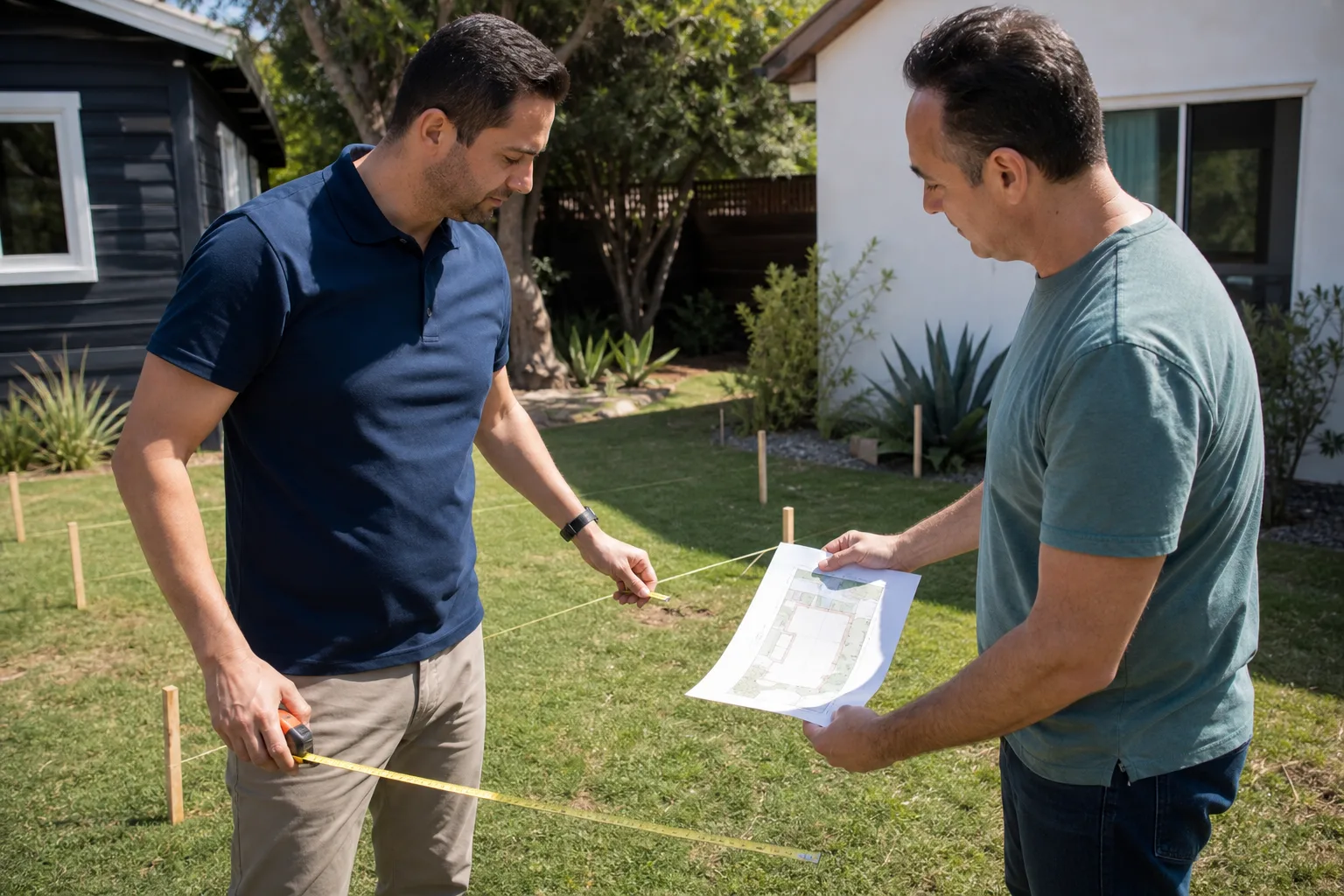
Site-built construction skips the state-factory layer entirely. The plans go to the local building department, the inspector who reviews your neighbor’s addition reviews yours, and the process is one conversation instead of two. In a market like Whitney, that inspector familiarity is worth real time. For projects that combine an ADU with a new addition, our Home Addition Contractor in Whitney page explains how the two scopes work together under a single permit set.
What Brand Warranties Cover Versus What Your Installer Covers
This is where homeowners get hurt, and it almost never shows up in the sales pitch. Two warranties apply to any prefab or modular ADU:
- The manufacturer’s warranty covers defects in the product as shipped, typically structural components, the panel or module system, and specified materials. It does not cover installation errors, site work, utility connections, or how the unit was set on your foundation.
- The installing contractor’s warranty covers the work they performed: foundation, connection, finish work, and anything they touched. This is the warranty that protects you when something goes wrong after move-in.
The gap between those two documents is where homeowner problems live. If your brand’s warranty covers a cracked panel but your installer’s work caused the crack, you can end up between two companies pointing at each other. Ask every brand and every builder the same question: if something fails, who’s coming to my property, and who’s paying? Get the answer in writing before you sign. At Sutton, every project is covered by the 365-Day Done Right Promise: if the work isn’t right within a full year of completion, we make it right. That’s a written guarantee, not a verbal handshake, and it fills the gap that a brand warranty alone leaves open.
The Case for Site-Built Custom Construction in Whitney
Prefab has real advantages: speed, predictable cost, and factory quality control. But there’s a case for site-built in a market like Whitney that gets shortchanged in most brand comparisons.
Local material availability matters. Whitney contractors have relationships with suppliers who stock what works here, and a site-built project can swap a cladding product or window spec when supply tightens without waiting on a factory order.
Inspector familiarity matters. Local building inspectors know the crews who work in Whitney and understand how the plans translate to the lot. When an inspector has seen a contractor’s work before, the review conversation is quicker and the punch list is shorter.
Site-specific conditions matter most of all. Caliche layers, drainage patterns, sun exposure on a specific lot, and the way wind moves through a particular neighborhood all shape how a structure will actually perform. A site-built design can account for those details. A prefab module can’t without custom engineering that erases the cost advantage. If your project combines livable square footage with a new room or garage conversion, the Room Addition Contractor in Whitney service is designed for exactly that scope.
Questions to Ask Any ADU Brand Before You Commit
We’ve walked Whitney homeowners through this list more times than we can count. Use it as a script when you talk to any manufacturer or builder.
- What’s included in the base price and what’s not? Site work, utility trenching, foundation upgrades, and finish changes are the usual exclusions. Get the line-item scope in writing.
- Who pulls the permits, and who handles inspections? If the answer is “you do,” that’s a substantial hidden cost and time commitment.
- What’s the UV and HVAC spec, and is it sized for Whitney summers? Ask for the numbers, not the reassurance.
- Has your foundation standard been reviewed for the specific soil type on my lot? If not, who pays for the engineer?
- What does your warranty cover, and what does my installer’s warranty cover? Get both documents.
- If something fails in month nine, who comes out and what does it cost me? The answer should be free, fast, and in writing.
- Can I speak to past customers in the area? Local references are the clearest signal of how a brand performs in this climate.
When you’re ready to compare the site-built path against the prefab quotes you’ve collected, call (844) 797-4814 for a free estimate and a written price before any work begins.
What ADU Brands Cost in the Whitney Market
Real dollar ranges help you self-qualify before you start scheduling tours. These are typical ranges for the Whitney market, and site work, utility trenching, and permit fees can move the final number considerably.
| Delivery model | Typical price range | Notes |
|---|---|---|
| Prefab / modular (studio to 1-bed) | $180,000 – $280,000 | Before foundation upgrades, utility trenching, and site work. |
| Panelized / kit system | $200,000 – $320,000 | Includes assembly labor; site work and crane costs can add more. |
| Site-built custom ADU | $220,000 – $360,000 | Most flexible on lot conditions; permits and inspections handled in one channel. |
| Garage conversion ADU | $110,000 – $180,000 | Leans heavily on existing structure; varies with utility relocation. |
Whatever model you choose, insist on a written price before work starts. A range in a brochure isn’t a quote, and a quote that grows after the first permit review isn’t a price. Our Sutton ADU Builders Whitney home page outlines how a written price is delivered on every project, and the estimate itself is free.
Common Mistakes to Avoid
- Treating a base price as a final price. That brochure number almost never includes site work, utility trenching, or foundation upgrades. Ask for the line-item scope.
- Assuming a coastal-climate spec will work in Whitney. HVAC sizing, UV ratings, and roof insulation specs that perform well near the coast can underperform here. Ask for the numbers in writing.
- Skipping the soil question. Caliche and expansive soils in the Whitney area can change your foundation design and your budget. Get a soil review before you commit to a foundation package.
- Confusing brand warranty with installer warranty. These are two different documents covering two different things. If you only have one, you have a gap.
- Assuming “modular” means no local permits. Site work and utility connections still go through the local building department. Budget the time.
- Comparing quotes on price alone without comparing scope. Two numbers can differ by tens of thousands of dollars and still be for the same unit, because one excludes half the work.
- Not asking who shows up at the door. On a months-long build, crews come and go. Ask how the contractor vets the people who’ll be on your property, and get it in writing.
When to Call a Professional
If you’re weighing a prefab quote against a site-built design, the decision usually comes down to a site-specific question no brochure can answer: will a standard foundation and spec perform on my lot, in this climate, for twenty years? That’s the question a local contractor can answer with you. Call a professional when the prefab quote has exclusions you don’t understand, when your lot has soil or drainage conditions the brand’s standard doesn’t address, when you want to compare the total project cost of prefab against site-built on the same scope, or when the warranty language leaves you uncertain about who fixes what. Sutton ADU Builders Whitney offers free estimates in Whitney, with a written price before any work begins and a 365-Day Done Right Promise on completed work. Call (844) 797-4814 to schedule yours.
Frequently Asked Questions
Neither is better in every case. Prefab brands like Abodu and Cover are faster and more predictable on cost, but their standard specs may need upgrades for Whitney’s high-desert climate and soil. Site-built construction adapts more easily to site-specific conditions and moves through the local inspection channel most Whitney inspectors already know. The right answer depends on your lot and how much design flexibility you need. Call (844) 797-4814 for a free estimate.
Typical ranges in the Whitney market are $180,000 – $280,000 for a prefab or modular studio-to-one-bedroom unit, $200,000 – $320,000 for a panelized kit system, and $220,000 – $360,000 for site-built custom construction. Garage conversions often land between $110,000 and $180,000. Site work, utility trenching, and permit fees will shift the final number. Call (844) 797-4814 for a written price before you commit.
Yes. Factory-built and modular structures in Nevada go through a state-level approval of the factory and design in addition to the local building permit for site work. That’s a different path than site-built construction, which goes only through the local building department. The extra approval layer can add time, so plan for it. Call (844) 797-4814 to talk through the timeline for your project.
A brand warranty typically covers defects in the product as shipped, such as structural components and specified materials, but it does not cover installation errors, site work, or utility connections. Those fall under the installing contractor’s warranty. The gap between the two is where most homeowner disputes originate. Ask both companies, in writing, who comes out if something fails. Our 365-Day Done Right Promise covers workmanship for a full calendar year from project completion.
Timelines depend on the delivery model. Prefab can move faster on the factory side, but site work, foundation prep, and utility connections still take time on your lot, and the extra state approval layer adds to the schedule. Site-built construction is the slowest option on paper and the most predictable in practice because it moves through one inspection channel. Call (844) 797-4814 to discuss a realistic timeline for your property.
You find out by asking specific questions: UV rating on the cladding, HVAC tonnage and the Manual J calculation, foundation engineering for your soil type, and window glazing specs. If a manufacturer can’t answer those in writing, that’s a warning sign. A local contractor can read your soil and site conditions and tell you whether a brand’s standard spec will work. Call (844) 797-4814 to schedule a free estimate.
The Bottom Line
Choosing an ADU brand in Whitney is really a decision about how a structure will perform under this specific sun, on this specific soil, through this specific approval process. Prefab brings speed and predictability but fixed specs that may need upgrades. Site-built construction adapts to your lot and moves through a single local inspection channel. Whatever you choose, get the spec in writing, get both warranties reviewed, and get a line-item price before work starts. Sutton ADU Builders Whitney delivers a written price on every project, and the 365-Day Done Right Promise guarantees completed work for a full year. Call (844) 797-4814 for a free estimate.
Written by the team at Sutton ADU Builders Whitney.