Last updated November 17, 2026
Seasonal ADU Care for Whitney: Year-Round Homeowner’s Guide
Whitney sits high enough that January nights routinely drop below freezing, and low enough that July afternoons bake an unshaded roof past 140°F. That swing is the whole story. An ADU built for a mild coastal climate and dropped onto a Whitney lot will start showing stress within about three years: hairline stucco cracks, a mini-split that strains in August, copper lines that complain in February. This guide walks you through what to do each season, what to check before it breaks, and how rental use changes the calendar. It’s written from Whitney, for Whitney.
Quick Answer
ADU care in Whitney follows a high-desert cycle: winterize exterior plumbing and check refrigerant lines in fall, watch for freeze damage in winter, inspect for frost-heave and re-caulk seams in spring, and manage attic heat, UV cracking, and dust-clogged filters in summer. A rental ADU needs the same tasks on a tighter schedule because of intermittent occupancy.
Table of Contents
- Why Whitney’s Climate Is Hard on ADUs
- Fall: Winterizing Before the First Freeze
- Winter: The Freeze Risk Rentals Face
- Spring: Frost Heave, Seams, and Detectors
- Summer: Heat, UV, and Dust
- Rental vs. Family ADU: Different Calendars
- The Whitney Four-Season Checklist
- Common Mistakes to Avoid
Why Whitney’s Climate Is Hard on ADUs
An ADU is a small structure. That’s obvious, but the consequences aren’t. Small footprint means less thermal mass, so the interior temperature tracks the outside air faster than a house does. A detached unit with a mini-split and modest insulation can hit 95°F inside by early afternoon and 40°F inside by 2 a.m. in January. Those daily swings put stress on every material that matters: stucco, caulk, paint, plumbing, and the electrical penetrations that pass through them.
Freeze-thaw is the other half. Water gets into a hairline crack in the exterior caulk during the day, freezes overnight, expands, and widens the crack. Repeat that forty or fifty times over a Whitney winter and a 1/8-inch gap becomes a 1/4-inch gap. This is why the ADUs we build and work on tend to show exterior seam failure first, not plumbing failure. The stucco tells you the story before the pipe does.
If you’re planning an ADU rather than maintaining one, the design choices made on day one matter enormously. Details like covered entries, insulated hose bibs, and proper flashing around roof penetrations are cheap at build time and expensive to retrofit. If you’re still in the planning phase, our ADU Builders in Whitney page covers sizing, lot rules, and permit basics for this area.
Fall: Winterizing Before the First Freeze
Fall work needs to happen in October, not late November, because the first hard freeze in Whitney can hit before Thanksgiving. Wait too long and you’re draining hose bibs in the dark on a 28°F evening. Three tasks matter most.
1. Shut off and drain exterior hose bibs
An exterior hose bib on a detached ADU is the single most overlooked freeze point, because owners don’t see it from inside. Locate the shutoff valve inside the ADU, close it, open the bib to drain the residual water, and leave the bib open through winter. Anything left in the line can freeze and split the pipe behind the wall.
2. Check mini-split refrigerant lines
Before the freeze, walk the exterior line set running from the condenser to the indoor head. Insulation should be tight and continuous, with no exposed copper. UV degradation of that insulation is common in high-desert climates, and once the copper is exposed, moisture and freezing temperature work against the integrity of the connection points. If you see bare copper, get the line set wrapped before the first freeze.
3. Inspect roof penetrations before wind season
Whitney gets wind events that pull at flashing and ridge caps. Check the flashing around vents, the mini-split line-set penetration, and any skylights or roof jacks. Loose flashing is a leak waiting for the first snowmelt. If you’re not comfortable on a roof, this is a task to hand off. Properly flashed penetrations are also one of the details a good builder gets right the first time; it’s why we’re careful about which product lines we recommend, from Abodu’s panelized systems to traditional James Hardie-clad stick builds.
Winter: The Freeze Risk Rentals Face
Here’s the scenario we see most often in Whitney: an ADU used as a short-term rental goes two or three weeks empty in January, the thermostat gets turned down to save energy, and a pipe in an exterior wall freezes. Vacancy plus an exterior-wall pipe is the recipe. It’s almost never the full-time family ADU that fails. It’s the rental sitting empty.
An exterior-wall pipe loses heat fast when the interior drops. On a single-digit night, the inside face of an exterior 2×6 wall with modest insulation can sit below freezing for hours. When that pipe splits, you find out in a phone call from a guest or a neighbor.
What to check in winter
- Set a floor on the thermostat. Even in a rental, keep the heat at 55°F when the unit is empty. That’s cheaper than one frozen pipe repair.
- Open cabinet doors under sinks on exterior walls. That small move gets warm air to the pipe. It works.
- Add a temperature alarm. A $40 smart sensor that texts you when the ADU drops below 45°F costs less than a plumber’s emergency call.
- Check the condensate line on the mini-split. A frozen condensate drain will back up into the indoor head.
- Look at the exterior at the base of walls. Ice damming at the slab edge is a sign of pooling water and inadequate grading.
If you’re running a rental, have your property manager or a neighbor walk the unit after any multi-day vacancy in the coldest weeks. That one habit prevents most of the winter calls we hear about in Whitney.
Spring: Frost Heave, Seams, and Detectors
Spring is when you find out what winter did. The snowmelt is gone, the ground is settling, and the structure is usually at its most revealing. In Whitney, spring is also when the big temperature swings ease off and you can actually see the exterior clearly.
Check the foundation perimeter for frost heave
Frost heave is when the soil beneath a structure expands as it freezes and pushes up on the foundation. On a detached ADU with a shallower footing or a slab-on-grade, this shows up as new cracks at the corner joints, doors that stick, or gaps under the sill plate. Walk the entire perimeter, look at the base of the stucco or siding, and note anything new. A crack under 1/16-inch is cosmetic. A crack you can slide a nickel into is a call.
Re-caulk seams after freeze-thaw cycling
Caulk is designed to flex, but every freeze-thaw cycle ages it. Inspect the seams where stucco meets trim, around windows and doors, and at the base of the cladding. If caulk pulls away or cracks, remove it, clean the joint, and reapply. Do this in spring when the joint is stable and not in the middle of a temperature swing. James Hardie siding systems hold up well in high-desert climates, but caulk at every joint still ages and needs refresh.
Test smoke and CO detectors
After heating season is the right time to test smoke and CO detectors, change batteries, and vacuum the covers. A heating system that ran hard all winter is the most likely source of a CO issue, and testing right after the season catches problems while they’re still fresh. If you built the ADU recently, confirm the detectors are still within their manufacturer’s service life; most are ten years.
Summer: Heat, UV, and Dust
Summer is the season that quietly does the most damage to an ADU in Whitney. It isn’t sudden; it’s a slow broil. Attic temperatures surpass 140°F, UV hammers the exterior, and dust coats every intake in the building.
Attic ventilation check
In a well-vented attic, heat escapes. In an under-vented one, heat cooks the roof deck, softens shingles, and drives the interior temperature. If your ADU has an attic, check that soffit vents are clear (they clog with dust and insect nests) and that ridge or gable vents are unobstructed. A small temperature probe or laser thermometer pointed at the underside of the roof deck should read within 20-30°F of outside air. If it’s reading 160°F on a 95°F day, the ventilation needs work.
Exterior paint and stucco inspection for UV cracking
UV turns paint chalky and makes stucco crisp and brittle. Walk the exterior in the morning before the sun heats the surface, looking for hairline cracks wide enough to catch a fingernail. Patch small cracks with elastomeric patching material, then re-paint the area. Larger cracks or any crack that runs diagonally from a corner of a window or door is worth a professional look, because that pattern often signals movement in the structure, not just paint failure.
HVAC filters on a compressed schedule
Dust is the defining nuisance of high-desert living, and it loads filters fast. Where a typical home replaces its filter every 90 days, an ADU in Whitney during summer should be on a 30-day cycle during peak dust season and 60-day the rest of the year. A mini-split needs the indoor filter cleaned every 2-4 weeks in summer; a clogged filter forces the compressor to work harder and shortens its life. If you run a rental, keep two filters on hand and swap them mid-stay for long bookings.
Rental vs. Family ADU: Different Calendars
The maintenance calendar for a family-used ADU and a rental ADU share the same tasks but not the same urgency. Here’s how the two use cases differ.
Family ADU
- Occupancy is consistent, so the interior stays warm, and freeze risk is low.
- Tasks can be scheduled around household routines.
- The owner is on site and can spot a problem the day it appears.
- Deep cleaning, filter swaps, and detector tests happen on a predictable rhythm.
Rental ADU
- Vacancies are the biggest freeze risk. Set a thermostat floor and monitor it remotely.
- Guests won’t report a slow drain or a stuck window. Fix small things between reservations, not during them.
- Base turnover on the booking calendar, not the calendar month. Every guest change is the moment to reset filters, check detectors, and eyeball the exterior.
- Keep a written maintenance log visible in the unit or in your owner records, so each turnover has a clear start point.
Both types do well with a documented yearly routine and a shortlist of trusted trades. If you’re adding an ADU as a rental, factor the maintenance time in before you commit. The build cost on an ADU in this size range typically runs $180,000 – $320,000 before site work, and annual maintenance runs a small fraction of that; the decisions that keep it that way are almost all in the calendar, not the wallet.
The Whitney Four-Season Checklist
Use this as your working list. Copy it into a note on your phone and reset it every year.
Fall (October)
- Shut off and drain all exterior hose bibs.
- Inspect mini-split line-set insulation for exposed copper.
- Check roof flashing at vents, skylights, and the line-set penetration.
- Clear gutters and downspouts.
- Test the ADU’s heating system before the first cold night.
Winter (December through February)
- Hold the thermostat at 55°F minimum, even when unoccupied.
- Open cabinet doors under sinks on exterior walls.
- Install a smart temperature alarm on rentals.
- After any multi-day vacancy, walk the unit.
- Clear snow from the base of exterior walls to prevent pooling.
Spring (March through May)
- Walk the foundation perimeter for new cracks or gaps.
- Inspect and refresh caulk at seams, trim, and windows.
- Test smoke and CO detectors; replace batteries.
- Check that doors and windows still operate smoothly; binding signals movement.
- Wash exterior cladding to remove winter grime before summer sun.
Summer (June through September)
- Walk the attic and confirm vents are open and clear.
- Inspect stucco and paint for UV cracking; patch and spot-paint.
- Clean mini-split indoor filters every 2-4 weeks.
- Replace HVAC filters every 30-60 days depending on dust.
- Check the exterior for dust accumulation at joints and around penetrations.
Common Mistakes to Avoid
- Skipping the fall hose-bib drain. In Whitney, this is the number one reason ADU pipes split in January. You have to actually drain the line, not just shut the valve.
- Letting the rental thermostat drop below 55°F. A week of vacancy at 40°F in January is enough to freeze an exterior-wall pipe. Occupancy is what protects the plumbing.
- Caulking a wet or cold seam. Caulk applied over moisture or in the middle of a freeze-thaw swing won’t bond. Wait for a stable spring day.
- Assuming dust isn’t a maintenance item. It is. Filters, intake vents, exhaust fans, and the mini-split coil all trap desert dust, and letting any of them load up shortens equipment life.
- Ignoring hairline stucco cracks caused by UV. They don’t stay hairline. Every winter expands them; patch now or repaint the whole face later.
- Doing your own roof work. If you aren’t comfortable walking a pitched roof at fall, don’t. A fall off a roof is far more expensive than the flashing repair.
- Running the same maintenance schedule as a mild-climate ADU guide. Generic national calendars miss the freeze-thaw and dust cycles that define Whitney. Use the local one.
When to Call a Professional
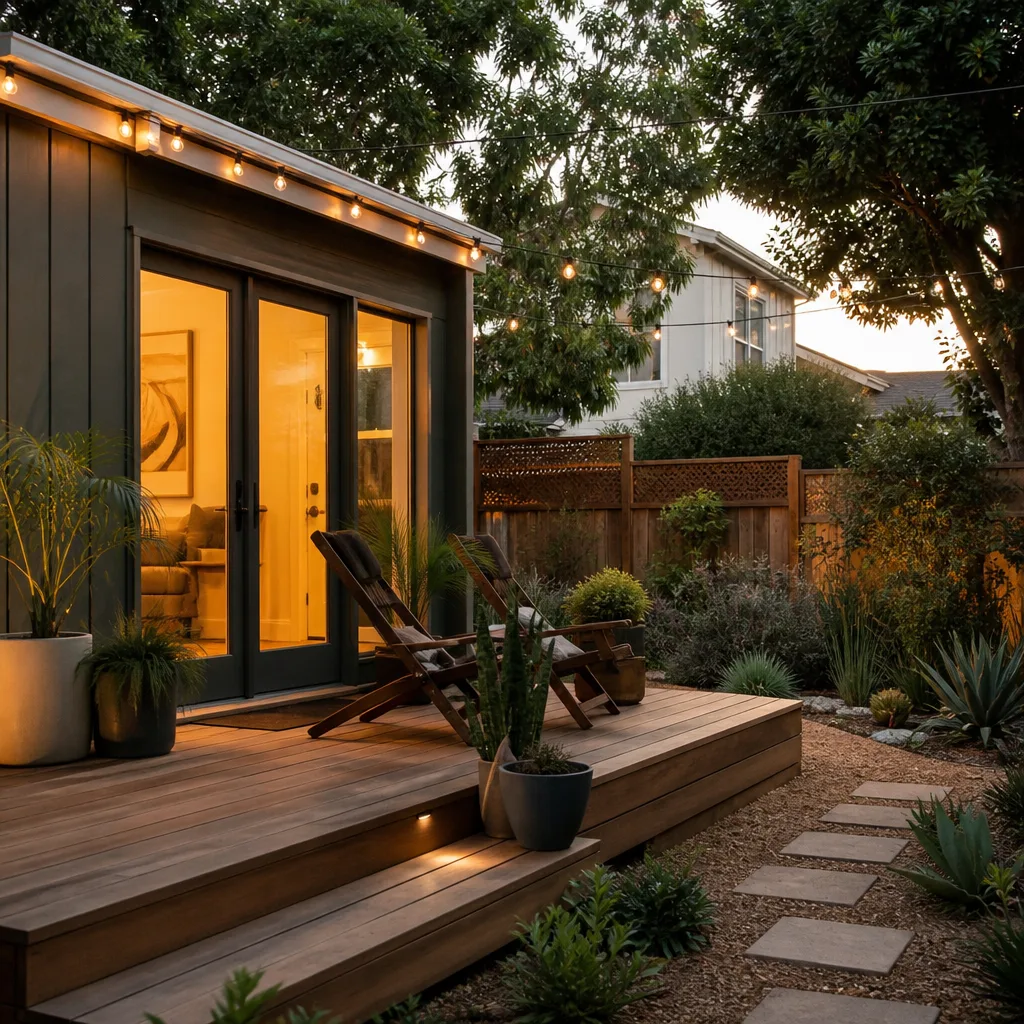
Most seasonal ADU care is a homeowner task. Plenty isn’t. Call a trained professional if you’re seeing: a pipe that’s already frozen (don’t try to thaw it with an open flame – use a heat gun, hair dryer, or space heater and call a plumber if the line won’t free), a crack in the foundation or slab wider than a nickel, a roof penetration you can’t safely access, electrical work inside or outside the ADU, or any gas appliance issue. These are the scenarios where a DIY fix costs more than the repair. If you’re adding a room to the main house to complement the ADU, the same rules apply on the Room Addition Contractor in Whitney side; a small addition still needs the same seasonal attention. And if your home-addition work touches the main structure, that’s the Home Addition Contractor in Whitney scope.
If you’re still determining whether a maintenance issue is worth repairing or whether the ADU needs a deeper follow-up, the Sutton team can help. Sutton ADU Builders Whitney offers free estimates in Whitney – call (844) 797-4814. Our technicians have up to 20 years of experience, and every technician is background-checked and photo-badged, with name and photo sent to you before arrival.
Frequently Asked Questions
Check the exterior at the base of walls and around plumbing penetrations once in fall before the first freeze, once mid-winter after any deep cold snap, and once in early spring after the thaw. That three-point rhythm catches almost every freeze-related problem before it becomes structural. If the ADU is a rental and sits empty for weeks, walk it after every vacancy in the coldest months. Call (844) 797-4814 for an exact quote on any repair – estimates are free.
Yes. A rental adds freeze risk from vacancy, longer intervals between physical inspections, and a longer list of small failures that guests won’t report. Use the same tasks but center the schedule on booking turnover rather than calendar months, and keep the thermostat at 55°F minimum even when the unit is empty. A $40 smart temperature sensor is the cheapest insurance you’ll buy for a rental ADU.
Homeowner-performed maintenance runs a few hundred dollars a year in supplies: filters, caulk, patching material, paint, and detector batteries. Professional service, when you call for roof flashing, stucco repair, or HVAC service, typically runs $180 – $650 per service call depending on scope. The costs that matter most are the ones you avoid. A frozen pipe repair runs $500 – $1,800; a stucco repaint after UV failure runs much higher. Call (844) 797-4814 for a free estimate if you’re pricing a specific repair.
Frost heave shows up as new cracks at foundation corners, doors that suddenly stick, or a visible gap under the sill plate. In Whitney it’s most common after a cold winter with a wet fall. If you find a crack you can fit a nickel into, or the sill plate has separated from the foundation, call a professional. Small hairline cracks at stucco joints are cosmetic and can wait for spring patching.
Clean the indoor filter every 2-4 weeks during dust season (roughly June through September), and check the outdoor condenser coils for dust buildup at the same time. Hose the outdoor coils gently (power off first) once a month during peak dust. Change HVAC filters every 30-60 days. A clean system runs cooler, lasts longer, and uses less energy, which matters most in July when the unit is working its hardest.
No. Every Sutton job is governed by our Threshold Standard: you receive a written price before any work begins, and that price is what you pay. If the scope changes, we tell you before we touch anything. Our 365-Day Done Right Promise covers defects in workmanship for one full calendar year from project completion, and if a repair fails within that year, we come back at no charge. That’s the standard on every project, whether it’s a seasonal tune-up on a completed ADU or a new build. Call (844) 797-4814 to schedule your free estimate.
The Bottom Line
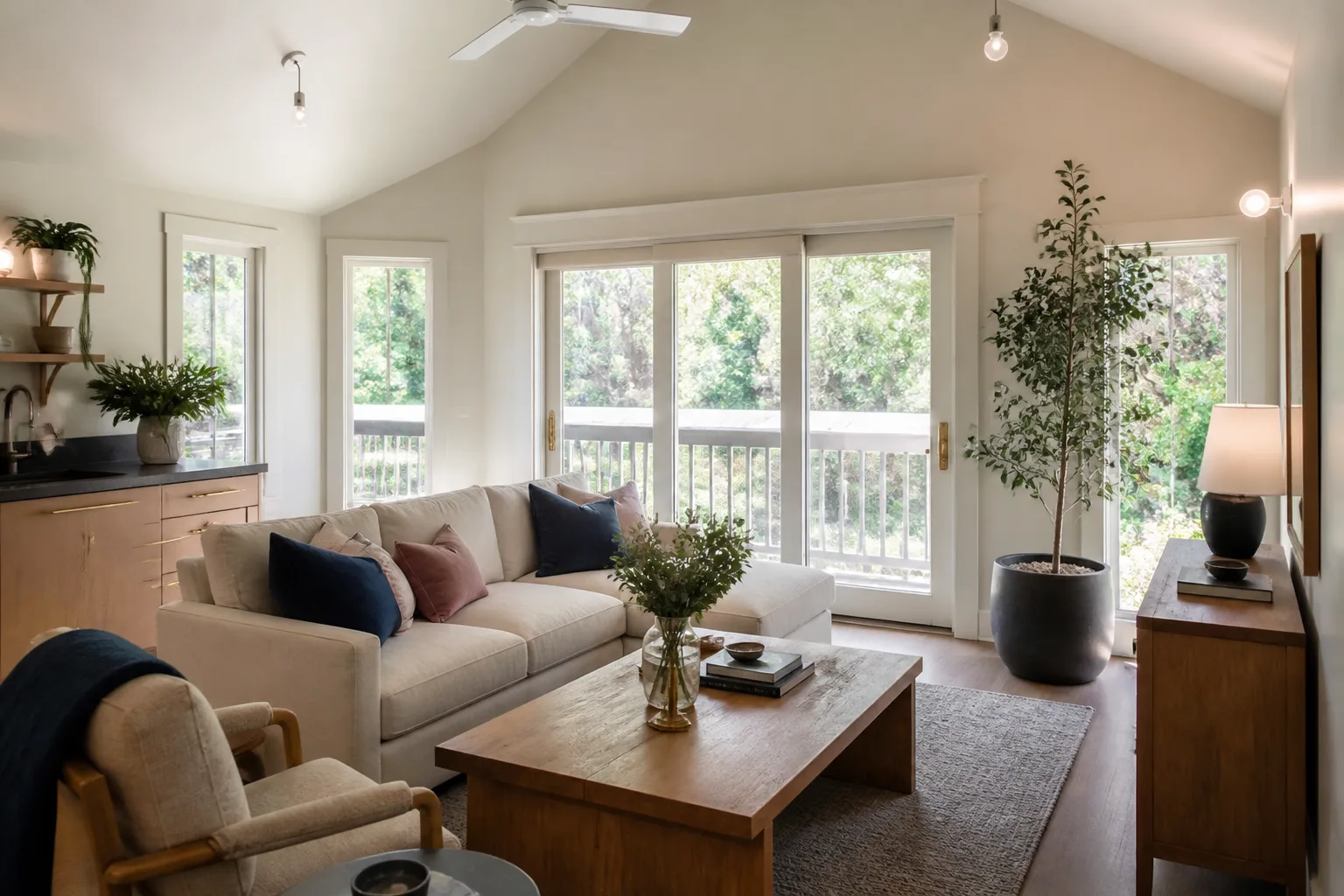
An ADU in Whitney lives in a demanding climate. The freeze-thaw cycles, the summer broil, and the near-constant dust do real damage to a structure that isn’t maintained for this specific place. But the maintenance itself isn’t complicated. Fall: winterize the plumbing and check the mini-split lines. Winter: keep the heat on and watch for the freeze risk that hits rentals hardest. Spring: inspect for frost heave, re-caulk, test detectors. Summer: attic ventilation, exterior UV checks, and filter discipline. Do these four things on the Whitney schedule instead of a generic national one and your ADU will look and function the way it did the year it was finished. That’s the goal, and it’s achievable. If you want a second set of eyes on any part of the build, our Sutton ADU Builders Whitney home page is the place to start.
When it’s time to bring in help – whether that’s a seasonal inspection, a repair, or a new ADU build – call us at (844) 797-4814 for a free estimate. Every project comes with a written price before work starts, a 365-Day Done Right Promise, and the Threshold Verified standard on every technician who shows up. We answer the phone live, 24 hours a day, 7 days a week. That’s what a Whitney ADU owner should expect.
Written by the team at Sutton ADU Builders Whitney.